Professional·One-stop Services
Get customized solution and favorable quotes here: +86 13526692320

Setting up a waste tire pyrolysis plant involves more than choosing a reactor and finding buyers for the oil. Before production starts, a project must pass environmental review, obtain permits, and manage risks specific to this type of facility.
These risks fall into five main areas: air pollution and toxic emissions, fire and explosion, water and soil contamination, solid residue management, and permitting complexity. Each one can delay or block a project if not planned for early.
| Risk area | Why it matters |
| Air pollution and toxic emissions | Uncontrolled releases affect health and can cause permit denial |
| Fire and explosion hazards | Tire stockpiles and process gases create fire risks regulators scrutinize closely |
| Wastewater and contaminated runoff | Scrubber water and oily runoff can pollute soil and groundwater |
| Solid residues (char and steel) | Residue classification affects both permitting and operating cost |
| Permitting complexity | Pyrolysis can fall under multiple regulatory categories at once |
The pyrolysis gas stream, if untreated, can release SO₂, NOx, particulate matter (PM), volatile organic compounds (VOCs), and polycyclic aromatic hydrocarbons (PAHs). If the feedstock contains PVC or other high-chlorine materials, dioxins and furans — highly toxic compounds — can also form.
| Control measure | How it works |
| Feed sorting and pre-treatment | Removing metals, PVC/PET, and high-chlorine contaminants before the reactor reduces dioxin formation at the source |
| Multi-stage gas-cleaning train | Cyclone dust removal → spray tower → desulfurization and denitrification tower → activated-carbon adsorption |
| Continuous emission monitoring | Real-time sensors trigger alarms if CO, SO₂, NOx, or PM exceed preset thresholds |
| Oxygen-limited operation | Running the reactor with controlled oxygen levels reduces toxic by-product formation |
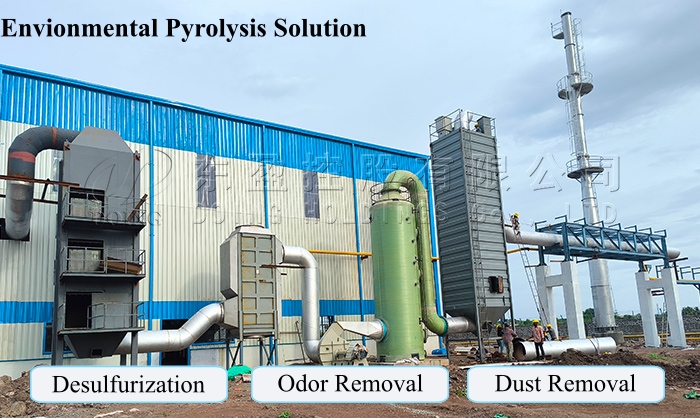
DOING ECO pyrolysis plant environment protection systems
2. Fire and Explosion Hazards
Raw waste tires are highly flammable. A large stockpile can burn for days, generate toxic smoke, and produce oily runoff that contaminates soil beyond the site boundary. Most regulators require a fire-risk assessment and a fire-water containment plan before granting a permit.
Inside the tire pyrolysis plant, the process gases — hydrogen, methane, and carbon monoxide — are combustible. Key hazards include gas leakage from poorly sealed joints, flashback from burner ignition failure, and hot-char ignition if air enters the reactor during discharge.
| Measure | What it does |
| Gas detection and alarm system | Monitors combustible gas levels and triggers emergency response |
| Flame arrestors and pressure-relief valves | Installed on all gas-carrying pipework |
| Sealed discharge system | Prevents air ingress while the reactor is still hot |
| Fire-water containment | Basins sized to hold all fire-fighting water plus oily runoff |
| Operator training and shutdown drills | Regular practice for emergency response |
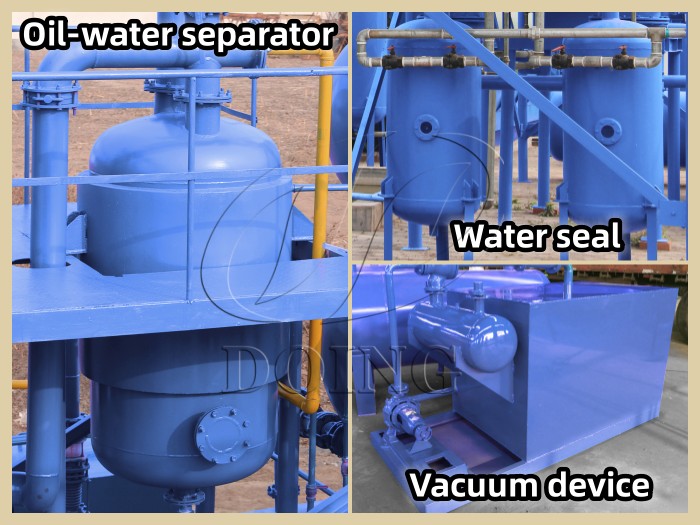
DOING ECO pyrolysis plant safety devices
A pyrolysis plant uses water in three places: cooling oil vapor, scrubbing flue gas, and cleaning combustible gas. In many pyrolysis plant designs this water passes through once and is discharged — and that is where the wastewater problem starts. Oily runoff from tire handling areas and rainwater on contaminated surfaces add to the volume.
If untreated water reaches soil or drains, it can contaminate groundwater. In most countries, contamination from a regulated activity requires mandatory reporting and remediation at the operator's expense. A pyrolysis plant that discharges untreated process water is a much harder permit case than one built to recirculate.
DOING ECO pyrolysis plants use a closed water loop. The condenser is shell-and-tube — oil flows inside the tubes, cooling water flows outside, and the two never contact. The cooling water stays clean and is reused.
The only water that picks up process contaminants is the spray water in the gas-scrubbing stage, which absorbs acidic compounds. This small volume is neutralized, settled, and returned to the loop — not discharged. The result: almost no wastewater during normal operation.
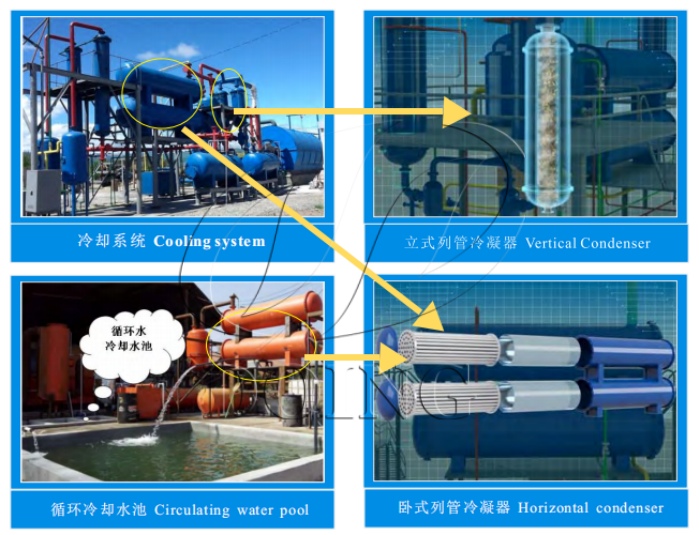
DOING ECO pyrolysis plant closed circulating water loop
Three solid by-products leave the plant: raw char, recovered steel wire, and fine char dust from the bag filter. How they are classified — product, recoverable resource, or waste — depends on local regulations and end use. Char may be a product if it meets specification; in other jurisdictions it is hazardous waste until a beneficial use is approved. The classification affects both the permitting pathway and operating cost.
| Test | Why it matters |
| PAH content | High levels can limit char market applications and trigger waste classification |
| Heavy metals (zinc, lead, cadmium) | Tire compounds concentrate in char |
| Moisture and ash content | Affects processing cost if upgrading to rCB |
A tire pyrolysis plant receives a waste material (used tires) — triggering waste management legislation — and produces an energy carrier (pyrolysis oil or syngas) regulated under fuel or chemical standards. This dual classification is a common source of permitting uncertainty.
In the US, several states have reclassified pyrolysis as manufacturing, simplifying the pathway. In Europe, the Industrial Emissions Directive (IED) and Waste Framework Directive both apply, and CE certification is a baseline.
| Permit type | What it covers |
| Air emissions permit | Types and quantities of substances released |
| Waste management licence | Receipt and handling of end-of-life tires |
| Water discharge permit | Any liquid effluents |
| Fire safety and storage permit | Tire stockpiles and flammable gas handling |
| Building permit | Plant structure and foundations |
| Environmental impact assessment (EIA) | Full-range environmental effects, required in some countries |
Start engaging with the regulator before purchasing tire pyrolysis plant. Confirm the applicable framework, identify which agencies have jurisdiction, select equipment with a gas-cleaning system and documentation package designed to meet local standards, and prepare a fire-risk assessment and water-management plan as part of the application.
Site selection: Check zoning, minimum separation distances from residential areas, ground conditions (permeable soil or high water table), and any pre-existing contamination before purchase.
Odor: Non-condensable gas leaks from seals or char exposure during handling can generate complaints. Regulators often require an odor management plan, particularly in Europe.
Traffic: Tire deliveries and output collections generate heavy vehicle movements. Early community engagement and a clear logistics plan reduce opposition and the risk of permit conditions restricting operating hours.
| Document | What it should cover |
| Process flow diagram (PFD) and P&ID | Process stages, emission points, and treatment systems |
| Emissions inventory | Each pollutant, source, expected rate, and control technology |
| Fire-risk assessment | Tire stockpiles, process gases, and hot-char handling |
| Water management plan | How scrubber water, oily runoff, and condensate are handled |
| Odor management plan | Sealing, gas recovery, and monitoring procedures |
| Equipment specifications | Gas-cleaning system, monitoring instruments, and sealing components |
DOING ECO provides PFDs, P&ID diagrams, equipment drawings, and third-party emissions testing reports as part of its project proposal package, matched to the requirements of the target market.
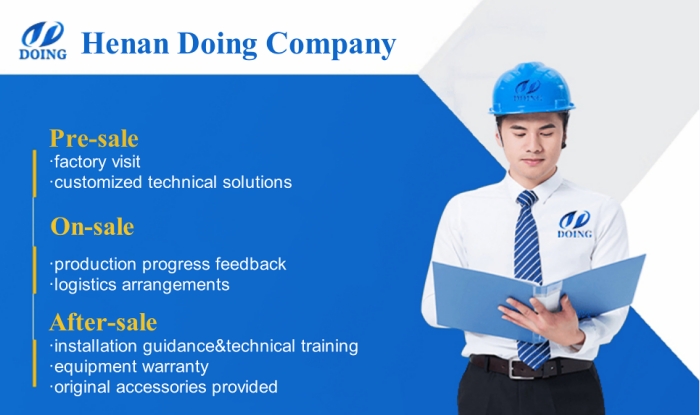
DOING ECO pyrolysis plant supplier services
CE marking is mandatory for selling pyrolysis plants into the European market. ISO 9001 and ISO 14001 are management system certifications. For European projects, CE is a baseline. For other markets, CE is often welcomed as quality assurance but is not always mandatory.
Timelines vary by country and project complexity. In Europe, the IED process can take several months to over a year if an EIA is required. Investors should engage with the relevant authority before purchasing pyrolysis plant.
Yes. Some countries classify pyrolysis as manufacturing; others as waste treatment. Some require a single integrated permit; others require separate permits for air, water, and waste. DOING ECO tailors equipment configurations and documentation to the target market, with experience in 120+ countries.
Confirm zoning and separation distances. Identify the environmental authority with jurisdiction. Conduct a Phase I assessment if the site has industrial history. Engage the fire authority early for tire storage and gas handling requirements.
Ask for the scope-of-supply document before signing. A complete scope names each component — from reactor seals to monitoring instruments. DOING ECO provides a named scope-of-supply document as standard for every project proposal.
Send DOING ECO your site location, feedstock form, target capacity, and local regulatory requirements — and get a preliminary scope of supply with a documentation checklist for your target market.
Leave A Message
Leave A Message