Professional·One-stop Services
Get customized solution and favorable quotes here: +86 13526692320

To all business owners involved in plastic, tire, or oil sludge pyrolysis projects—especially those aiming to sell pyrolysis oil to the EU or other high-end markets—there is a question you surely care about today: Can my pyrolysis oil project actually obtain ISCC certification? The answer is a resounding YES!
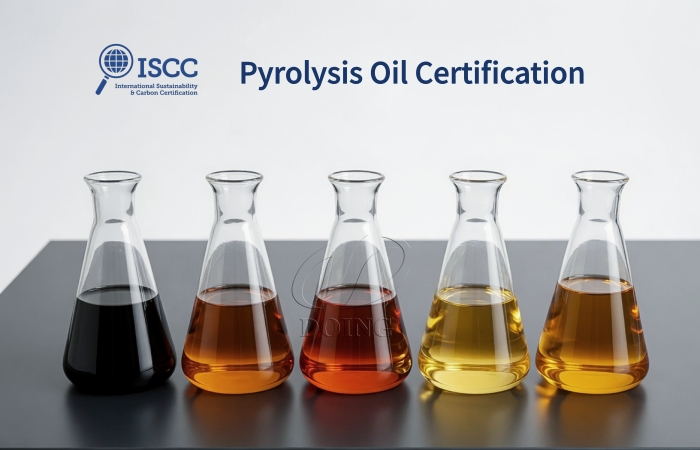 Pyrolysis oil ISCC certification
Today, I will explain the specific types of ISCC certification applicable to pyrolysis oil, outline the certification process, and detail exactly what preparations are required.
ISCC stands for International Sustainability & Carbon Certification. It is globally recognized and endorsed by the EU, with three core requirements at its heart: Sustainability, Full Traceability, and Verified Carbon Emission Reduction.
For pyrolysis oil production projects like yours, there are primarily two types of certification available:
①ISCC EU: This is a mandatory certification for the EU market. If you intend to sell your pyrolysis oil to the EU as a biofuel or industrial fuel, you must hold this certificate. It requires a carbon emission reduction of ≥50% (a threshold that will rise further by 2030).
②ISCC PLUS: This is a voluntary certification with global applicability. It is ideally suited for plastic recycling, chemical feedstock production, and non-EU markets, with a primary focus on the circular economy and leveraging a "green brand" premium.
Pyrolysis oil derived from waste plastics or waste tires is eligible for either ISCC EU or ISCC PLUS certification. Provided that your raw materials are compliant, your process is fully traceable, and your carbon emission reduction calculations meet the required standards, you can successfully obtain the certification.
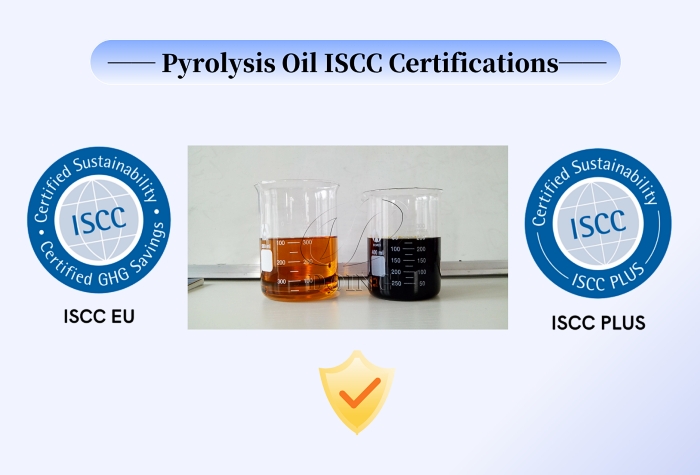 Two ICSS certifications of pyrolysis oil production project
When pursuing ISCC certification for a pyrolysis oil production project, there is no need to memorize complex regulatory clauses; you simply need to clearly understand and fulfill three key conditions:
Raw Material Compliance: These pyrolysis raw materials must not originate from areas subject to deforestation or from high-carbon conservation zones. Please choose the following as the pyrolysis machine feedstock: scrap plastics, waste rubber, old tires, or industrial residues, etc.
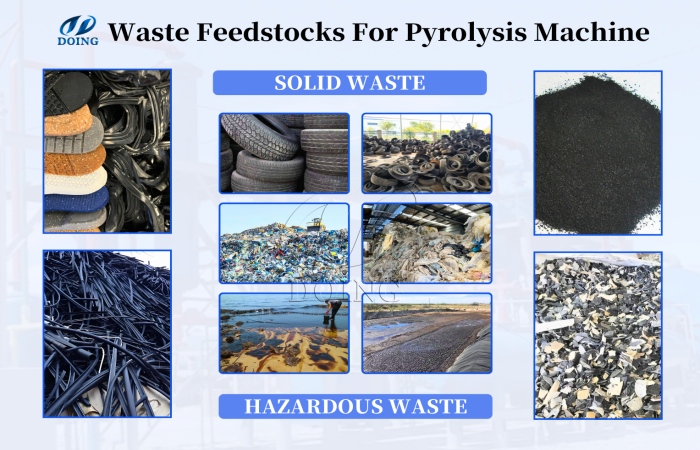 Waste feedstocks for pyrolysis oil production
Full Traceability: The entire supply chain—from the collection of solid waste or hazardous waste, through plant intake, pyrolysis processing, pyrolysis oil extraction, and storage, to final shipment—must be fully traceable. Every single batch requires comprehensive records and source verification, ensuring that the material's clean and its destination is clear.
Verified Carbon Emission Reduction: Based on a full life-cycle assessment, the project must demonstrate a carbon emission reduction of ≥50% compared to traditional fossil fuels (as required by ISCC EU). These data points must be calculated and verified by an independent third party. Therefore, provided that you possess proper equipment, maintain effective management, and meticulously document all details, these three fundamental requirements can be readily met.
The total duration of obtaining a ISCC Certification for pyrolysis oil production project is about 2–4 months. Here are the step-by-step of complete ISCC certification process:
Step 1: Select the Correct Certification Type + Choose an Accredited Body (1 Week)
Selling fuel to the EU market → ISCC EU; Engaging in global circular economy/plastics → ISCC PLUS.
For the certification body, select one officially recognized on the ISCC website. You can search directly via Google or use AI tools to generate recommendations for authoritative bodies.
Step 2: Registration on the ISCC Website (3–7 Days)
Visit the official ISCC website to fill out your company information, scope of certification, and product details (e.g., pyrolysis oil).
Upon submission, you will receive a unique registration number; this number is mandatory for use during the subsequent audit process.
Step 3: Establish the Management System + Prepare Comprehensive Documentation (The Core Step: 2–4 Weeks)
This is the most critical stage. The following documents are mandatory for obtaining ISCC certification:
Corporate Credentials: Business License, Environmental Impact Assessment (EIA) Report, Pollution Discharge Permit, Production License.
Raw Material Sustainability: Proof of waste plastic origin, recycling contracts, non-deforestation declarations, labor compliance records (based on ILO standards).Traceability Records: Mass Balance Sheets, Batch Records, Inbound/Outbound Logistics Logs, Supplier Credentials.
Carbon Emission Reduction: Full Life Cycle GHG (Greenhouse Gas) Report, Emission Reduction Calculation Sheets (demonstrating ≥50% reduction), Energy Consumption/Emission Data.
Internal Procedures: ISCC Manual, Procedural Documents, Risk Assessments, Internal Audit Records.
Simply put: Clearly and comprehensively document everything related to "raw material sourcing," "the waste-to-oil production process," and "how carbon emission reductions are achieved."
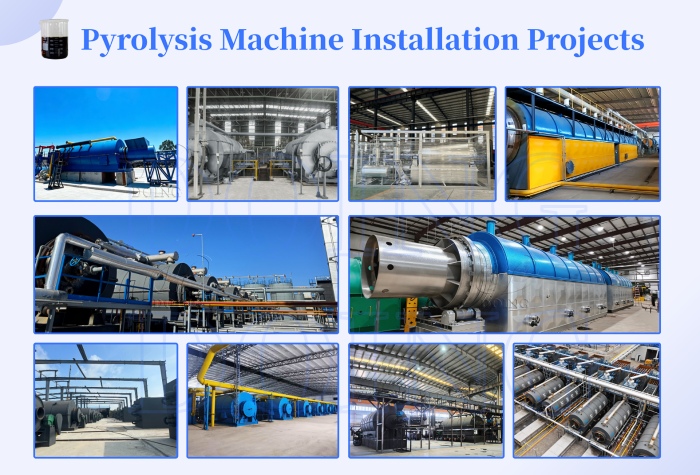 Pyrolysis oil production projects installed by DOING
Step 4: Internal Audit + Third-Party On-site Audit (1–2 Weeks)
First, conduct a self-audit internally to identify and rectify any potential risks or issues in advance.
The certification body will then conduct an on-site audit to: review documentation, inspect the production line, verify raw material origins, cross-check carbon data, and examine the traceability system.
Step 5: Audit Passed → Certificate Issuance + Annual Maintenance
Once any required corrective actions have been successfully implemented, the ISCC certificate will be issued. It is valid for a period of one year.
Annual surveillance audits are required, and a comprehensive renewal audit must be conducted upon the certificate's expiration to maintain certification status. Certificates are available for verification on the official ISCC website, allowing buyers to verify their authenticity.
Consequently, pyrolysis oil production projects are fully eligible for ISCC certification (EU/PLUS). With a clear process, a controllable timeline, and tangible returns, this certification is an essential prerequisite for selling pyrolysis oil to premium global markets.
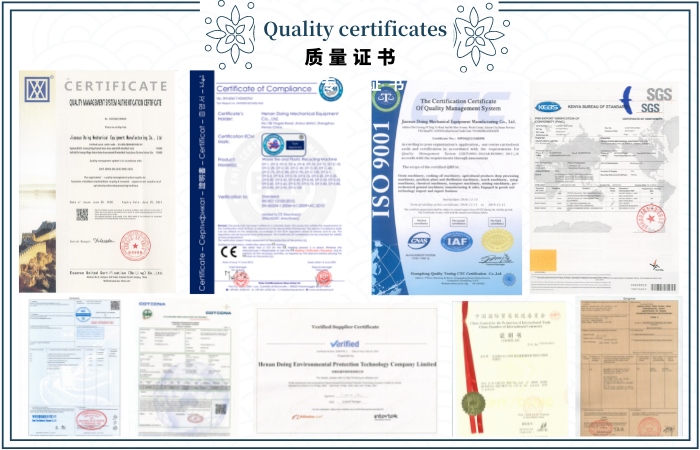 Certifications of pyrolysis equipment manufacturer DOING Company
Henan Doing Company is a leading international manufacturer of pyrolysis equipment with many certifications and honors, such as ISO, CE, SGS, Patent Certifications, National High Technology Enterprise, European Authorized Representative, etc. Beyond simply manufacturing the machinery, we offer comprehensive assistance—ranging from equipment selection and process compliance to documentation support—providing a complete foundation to ensure the regulatory compliance and smooth operation of your pyrolysis project.
Leave A Message
Leave A Message