Professional·One-stop Services
Get customized solution and favorable quotes here: +86 13526692320

If you’re planning a 30–50 TPD oil sludge treatment plant, the first thing to look at is not the capacity on the quotation. It is the sludge going into the reactor. Oil content, moisture, solids and heavy components can all affect how the system heats, runs and handles residue.
The equipment configuration should follow those feed characteristics. You also need to verify that the supplier has experience with comparable sludge and clarify the permit requirements before the equipment is finalized.
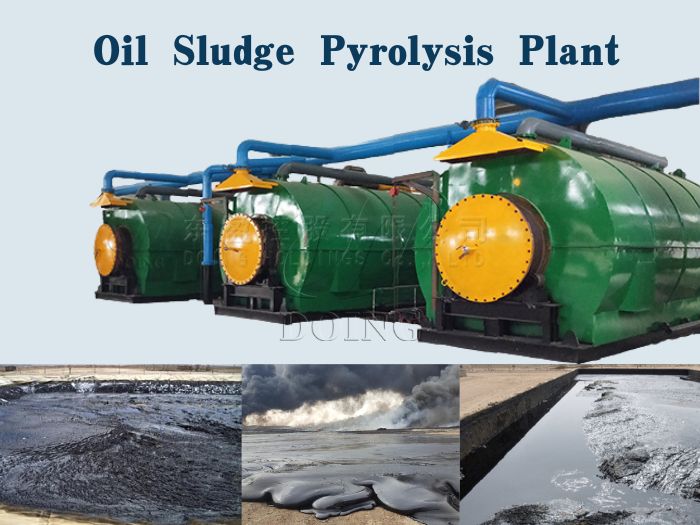
A “30–50 TPD” target only means something once you’ve defined the sludge. Moisture sets the evaporation load — a 50 TPD stream at 30% moisture contains about 15 TPD of water — while oil content affects recoverable liquid. Solids, sulfur and metals can also affect fouling, corrosion and gas treatment.
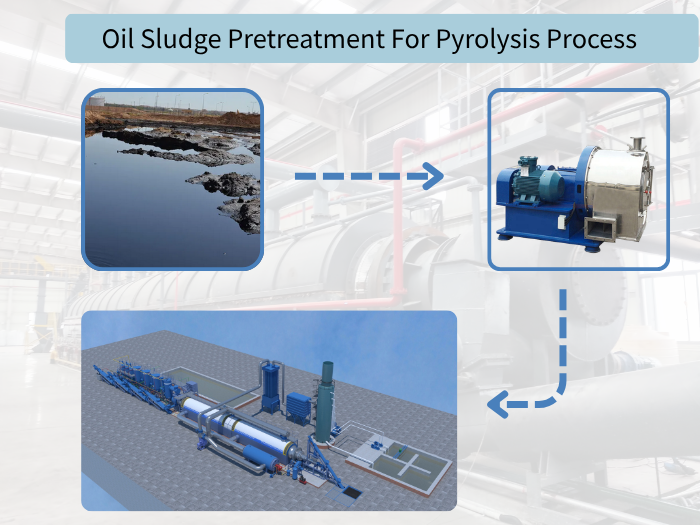
High moisture may require dewatering. Sand, debris or other coarse material may require pretreatment and a suitable discharge system.
This is also where many operating problems begin. At DOING ECO, we require a sludge analysis before preparing an equipment proposal. A specification based on “typical” oil sludge can be misleading if the actual feed has a very different composition.
Ask the supplier to state the following in the proposal:
Feedstock basis
Design or guaranteed throughput
Operating hours
Accepted moisture range
Solids and viscosity limits
Pretreatment requirements
The more clearly the feed is defined, the easier it is to judge whether the proposed oil sludge pyrolysis equipment is suitable.
Oil sludge does not behave like a clean, uniform feedstock. Heavy hydrocarbons, asphaltenes and solids can contribute to deposits on the reactor wall, while changes in moisture can affect heat demand and operating conditions.
Once deposits build up, heat transfer can become less efficient and cleaning may take the line out of service. That makes deposit management one of the first things to check when comparing an oil sludge pyrolysis reactor.
At DOING ECO, oil sludge applications can be designed around several areas:
Stainless steel reactor. Reactor material should be selected according to the feed composition, operating temperature and corrosion conditions. If stainless steel is specified, ask for the material grade, thickness and where it is used in the system. “Stainless steel” by itself does not explain how the reactor will perform with a particular sludge.
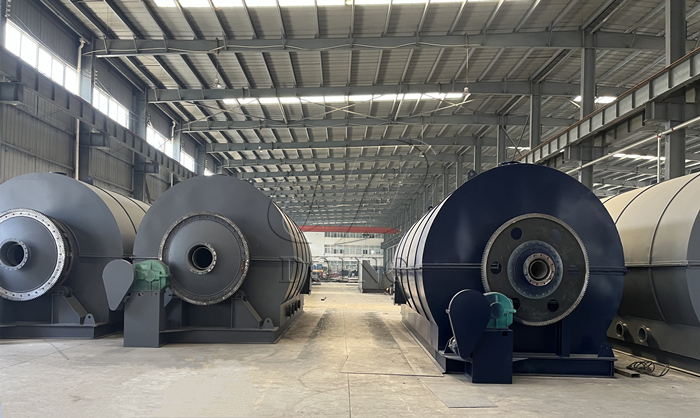
Dedicated de-coking structure. Depending on the feed and reactor design, a scraping or dedicated de-coking structure can help manage deposits and limit their effect on heat transfer. The practical question is how deposits are removed and discharged, and how often the system needs to be stopped for cleaning.
Process catalyst. A catalyst can be used in some oil sludge pyrolysis processes to influence reaction conditions and product distribution. Its effect depends on the feedstock, catalyst and operating conditions, so any claimed improvement in oil yield, product quality or energy consumption should be supported by project-specific data.
These details are more useful than simply comparing reactor capacity. When reviewing an oil sludge pyrolysis system, ask the supplier to explain how the reactor deals with deposits, variable feed and residue discharge under actual operating conditions.
Once the feed is understood, the next decision is the oil sludge pyrolysis plant configuration.
“Modular” describes how the capacity is arranged; it does not automatically mean batch operation. A project may use multiple batch units, multiple continuous units or a single continuous line.
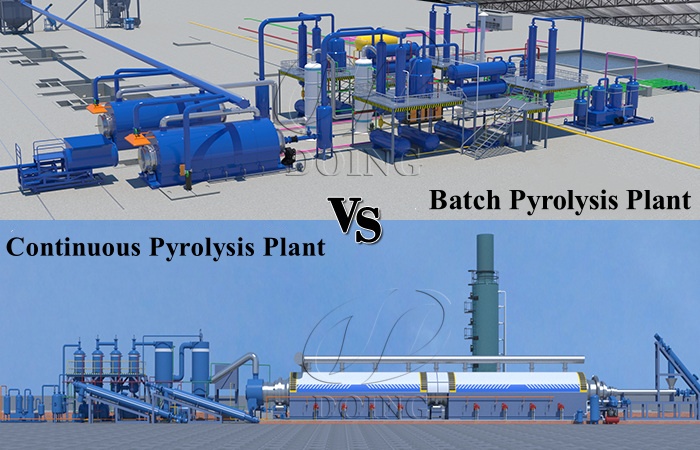
Feeding stability matters more than the nameplate capacity. For continuous systems, check maximum feed moisture, residence time, coke removal and gas handling. For batch systems, look at cycle time and whether one unit can be stopped without shutting down the others.
A 2 × 15 TPD layout, for example, has a nominal installed capacity of 30 TPD. That does not mean every type of oil sludge can be processed at 30 TPD under all operating conditions.
This is the practical side of how to choose an oil sludge pyrolysis plant: start with the feed and operating conditions, then select the configuration.
Recovered oil, non-condensable gas and solid residue all need a defined destination. They may be used as fuel, sold, reused, further treated or sent to licensed disposal, depending on the project and local requirements.
Those decisions can affect storage, product classification, emissions control and residue handling, so they should be considered before the equipment scope is finalized.
There is no single global list of oil sludge pyrolysis environmental permit requirements. The applicable requirements vary by country, local authority and the legal classification of the incoming sludge and resulting products or residues.
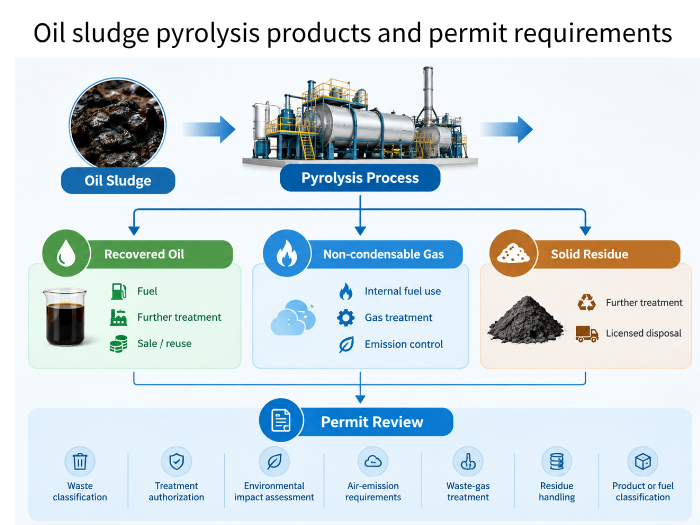
Depending on the project, the approval process may involve:
Waste classification
Treatment authorization
Environmental impact assessment
Air-emission requirements
Waste-gas treatment
Residue handling
Product or fuel classification
As one example, hazardous-waste facilities in the United States may be subject to RCRA permitting requirements, depending on the waste classification and facility activities.
DOING ECO can provide technical information such as the process flow, equipment data, mass balance and gas-treatment design for the project consultant to review. The final permit classification and approval, however, need to be confirmed with the relevant local authority or environmental consultant.
A supplier’s experience matters most when it matches the material you actually plan to process.
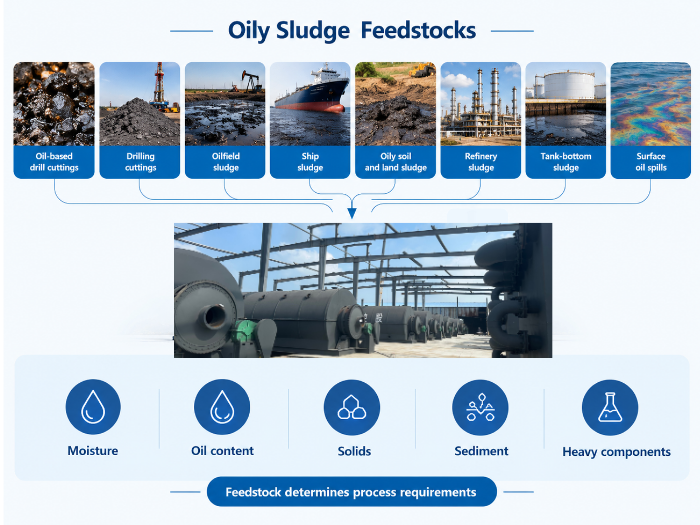
For nearly 15 years, DOING ECO has developed pyrolysis processes and accumulated project installation experience for a range of oily sludge and oil-contaminated wastes, including oil-based drill cuttings, drilling cuttings, oilfield sludge, ship sludge, oily soil and land sludge, refinery sludge, tank-bottom sludge and surface oil spills.
These materials can behave quite differently in a thermal treatment process. Moisture, oil content, solids, sediment and heavy components can all affect pretreatment, heating and residue discharge. That is why a project reference is more useful when the feedstock is clearly identified.
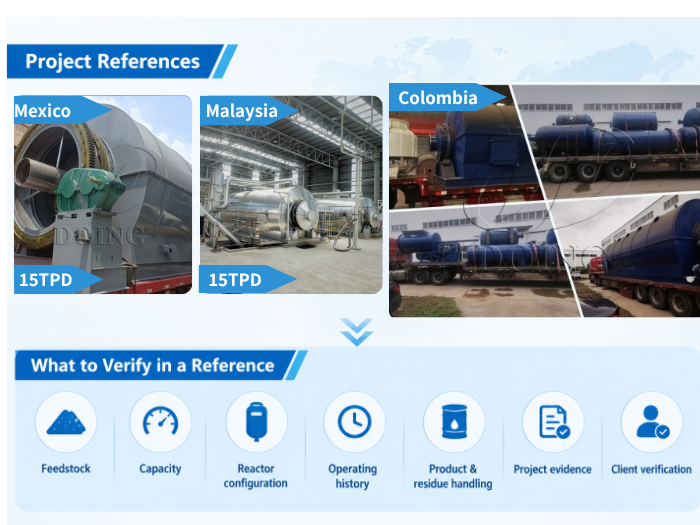
DOING ECO’s oil sludge references include 15 TPD systems in Mexico and Malaysia and a 90 TPD Colombia project configured as 6 × 15 TPD modules.
The Colombia project shows one way to build larger processing capacity through multiple units rather than relying on a single large reactor. Six 15 TPD units provide a combined nominal capacity of 90 TPD while keeping the processing capacity divided among individual lines.
When checking a supplier’s references, ask for:
Feedstock type
Processing capacity
Reactor configuration
Operating history
Product and residue handling
Available project evidence
A client or project contact that can be verified
Photos alone do not tell you how a system performs. A reference that uses similar feedstock and operates at a comparable scale is much more useful when evaluating an oil sludge treatment plant.
Can’t explain how deposits and coking are managed
No reactor material or build-quality specification
No comparable running case
TPD capacity quoted without a defined feed basis
No technical information to support the permit review
Oil sludge can form deposits during thermal treatment, particularly when the feed contains heavy hydrocarbons, asphaltenes and solids. The actual risk depends on the feed composition and operating conditions. DOING ECO addresses deposit management through reactor design, material selection, de-coking arrangements and process conditions suited to the feed.
The requirements depend on the country and on how the sludge is classified locally. They may involve waste classification, treatment authorization, environmental assessment, air-emission controls and residue handling. The applicable requirements should be confirmed with the local environmental authority or a qualified environmental consultant.
Yes. DOING ECO has oil sludge references including 15 TPD systems in Mexico and Malaysia and a 90 TPD Colombia project configured as 6 × 15 TPD modules. The relevant feedstock, capacity and operating details can be discussed during project evaluation.
Ask for the feedstock type, processing capacity, reactor configuration and operating history. The closer these conditions are to your own project, the more useful the reference will be. You can also ask whether the project can be independently verified through site information, project documentation or a client reference.
Send your project country, target capacity, moisture, oil content, solids content, product outlets and available laboratory analysis.
With these details, DOING ECO can evaluate the feedstock, compare suitable configurations and define the pretreatment, reactor and technical requirements for your oil sludge project.
Leave A Message
Leave A Message