Professional·One-stop Services
Get customized solution and favorable quotes here: +86 13526692320

A useful Request for Quotation (RFQ) for waste recycling pyrolysis equipment should make five things clear: what you want to process, how much you need to process, how the system should operate, where it will be installed, and what the supplier should include in the quotation.
Based on Doing ECO’s experience delivering pyrolysis production lines to clients across 120+ countries and regions, the key information can be grouped into five areas: project background, feedstock, capacity and process, technical and compliance requirements, and commercial scope.
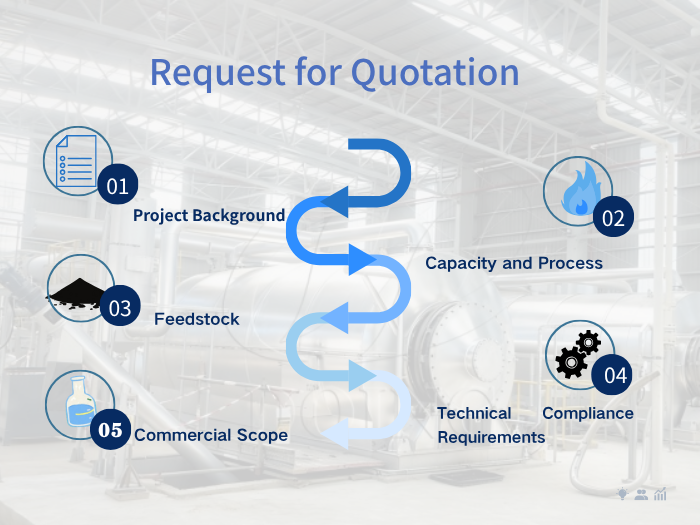 Necessary elements included in a quotation for waste pyrolysis equipment
You do not need to specify every engineering parameter yourself. If a requirement depends on the feedstock or process, ask the supplier to recommend a suitable configuration.
| Section | Key information |
| Project | Destination, commissioning date, operating schedule |
| Feedstock | Type, condition, moisture, contamination |
| Capacity | kg/day, TPD, or tons/batch |
| Process | Batch / semi-continuous / continuous |
| Products | Target products and quality requirements |
| Technical | Feeding, heating, discharge, automation |
| Compliance | Environmental and equipment standards |
| Commercial | Incoterm, payment, delivery, warranty |
| Supplier | Technical proposal, scope, references |
| Services | Installation, training, spare parts, after-sales |
Start with the basic project information:
Destination country and city
Delivery port or final delivery address
Target commissioning date
Expected operating schedule
Budget range, if available
The destination is important because it can affect shipping, local standards, installation, import procedures, and the Incoterm used in the quotation.
A final budget is not essential, but an approximate investment range can help suppliers avoid proposing equipment that is significantly larger or more complex than required.
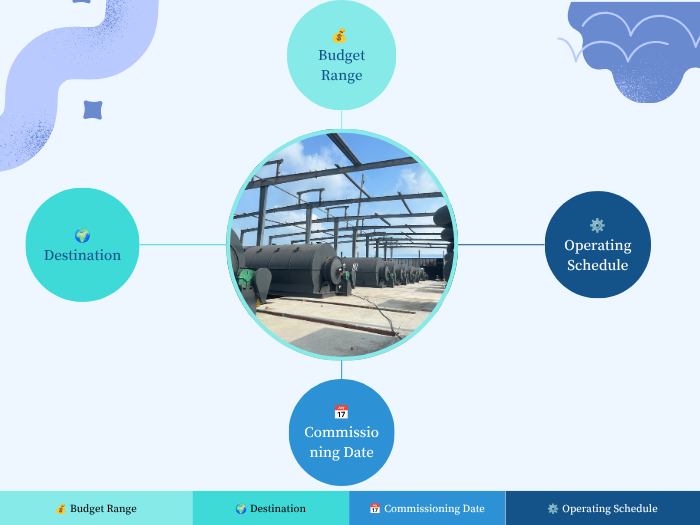 Key project details for an accurate pyrolysis equipment quotation
For example, Doing ECO uses the destination and budget information to determine whether to propose a standard configuration or a customized solution, and to calculate accurate shipping costs based on the nearest port of discharge.
Feedstock is one of the most important parts of an RFQ. Different wastes can require different pretreatment, feeding, heating, condensation, and residue-handling systems.
Include:
Feedstock type
Physical form and particle size
Moisture content
Contamination level
Main composition, if known
Whether pretreatment is required
Approximate daily feedstock availability
Be as specific as possible rather than simply writing “waste” or “mixed waste.”
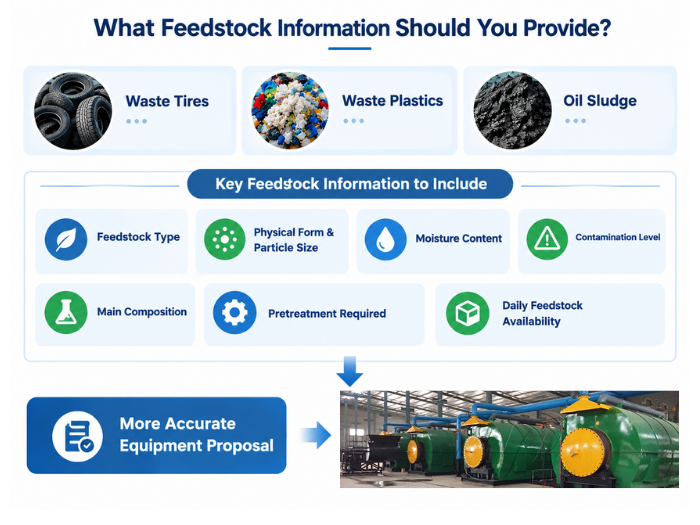 Key feedstock details needed for a pyrolysis equipment quotation
For example:
A tire recycling pyrolysis project should indicate whether the feedstock consists mainly of passenger car, truck, or OTR tires.
A plastic project should identify the main polymer types, such as PE, PP, or PS.
If several feedstocks may be processed, list them separately.
Doing ECO’s engineering team uses this information to recommend specific pretreatment configurations. For example, waste tires require bead wire removal and shredding to 5–20 mm before feeding to a continuous pyrolysis reactor, while mixed plastics may need crushing and drying.
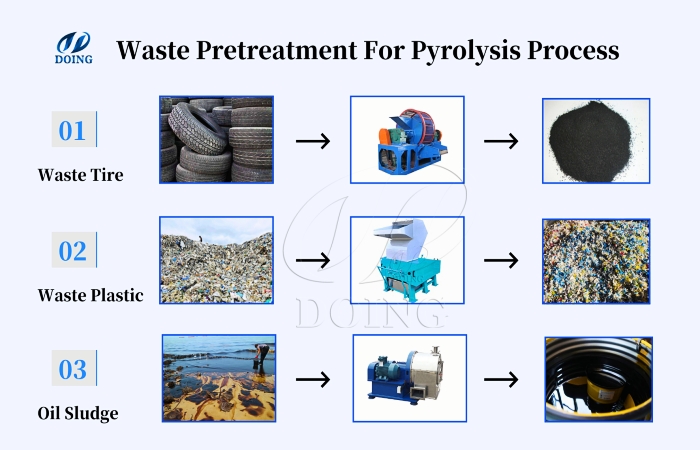 Pyrolysis pretreatment process for different types of waste
DOING pyrolysis systems have processed over 30 types of feedstock, including waste tires, mixed plastics, oil sludge, medical waste, and aluminum-plastic composites, with each requiring a different reactor configuration and temperature profile.
State the required capacity clearly and use the correct unit:
kg/day for laboratory or pilot systems, typically 100–500 kg/day
tons/day (TPD) for commercial systems, typically 15–50 TPD per set
tons/batch for batch equipment
Do not confuse batch capacity with continuous throughput.
| Process type | Operating principle | Typical application | Typical capacity range |
| Batch | Feed → pyrolysis cycle → discharge | Smaller commercial or pilot projects | 1–20 tons/batch |
| Semi-continuous | Some feeding or discharge steps are continuous | Partial automation | 5–15 TPD |
| Fully continuous | Continuous feeding and discharge | Larger commercial operations | 15–50+ TPD |
Because “semi-continuous” can mean different things between suppliers, ask them to explain how feeding, heating, pyrolysis, and discharge actually operate.
For example, if you require 20 TPD continuous processing, write “20 TPD continuous throughput” rather than simply “20-ton pyrolysis plant.”
An RFQ should describe the required performance without requiring the buyer to design the equipment.
Product and Process Requirements
State the products you expect, such as:
Pyrolysis oil: target oil yield and intended application
Recovered carbon black: whether you want to refine it for further application or meet a specific refining degree
Steel wire
Syngas
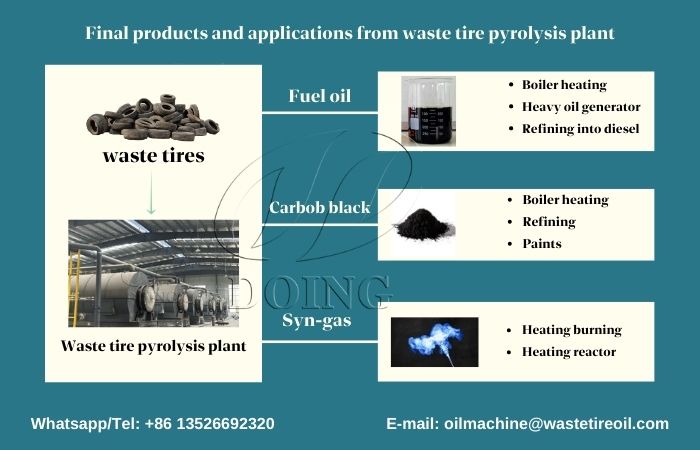 Applications of products from waste tire pyrolysis and oil recovery projects
If product quality is important for your market, include the relevant requirements where known.
You can also specify requirements for:
Feeding and discharge
Heating method
Syngas recycling
Condensation and oil collection
Residue handling
Flue-gas treatment
Product upgrading
PLC/HMI or other automation
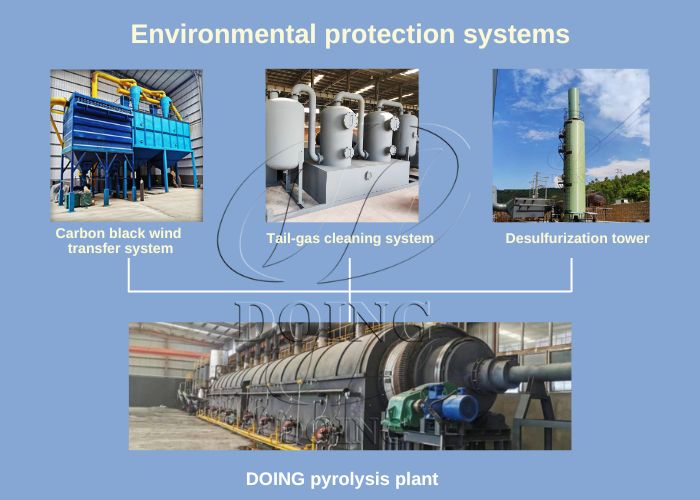 Waste pyrolysis oil refining environmental protection equipment configuration
If you do not have an established engineering specification, it is usually better to ask:
“Supplier to recommend a suitable configuration based on the feedstock, capacity, and operating requirements.”
This allows the supplier to propose pyrolysis equipment based on the actual project rather than forcing the buyer to define technical parameters they may not be familiar with.
State the standards and regulations applicable to the destination market, such as:
CE or other applicable equipment requirements
ATEX requirements where applicable
Electrical and control-system standards
Local emission requirements
Environmental approval requirements
Do not assume that the same requirements apply in every country.
Doing ECO holds ISO 9001 and ISO 14001 management systems and CE marking for equipment exported to international markets. Its pressure vessel components are built based on EN 13445 standards.
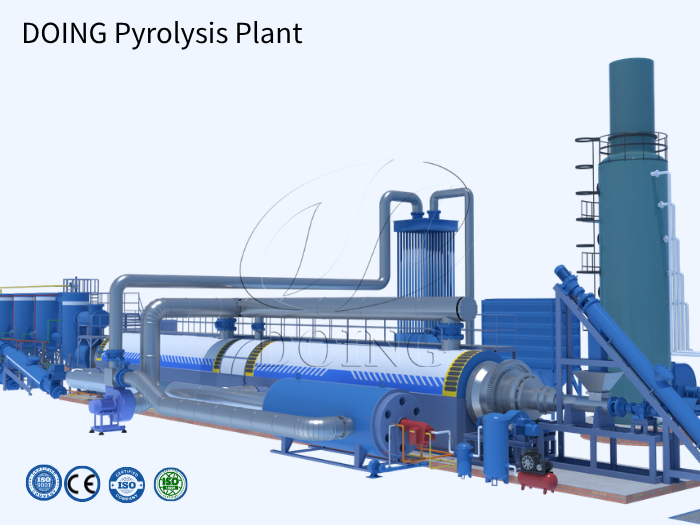 Waste pyrolysis equipment with ISO and CE certification from Doing ECO
When preparing a waste recycling equipment quotation, Doing ECO’s engineering team reviews the destination country’s specific regulatory requirements and adjusts the equipment configuration accordingly — for example, adding ATEX-compliant explosion-proof motors for installations in zones with combustible dust risk.
Specify the commercial requirements that suppliers should include:
Incoterm and destination
Payment terms
Delivery time
Warranty
Installation and commissioning
Operator training
Spare parts
After-sales support
More importantly, ask the supplier to separate the quotation into clear cost categories, including:
Base equipment
Optional equipment
Installation and commissioning
Training
Spare parts
Transportation and other additional costs
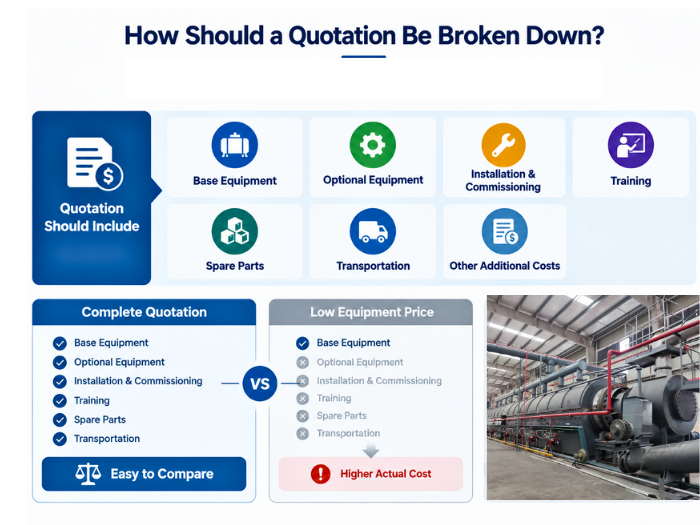 Key cost items in a waste recycling pyrolysis equipment quotation
This makes supplier quotations easier to compare and prevents a low equipment price from appearing cheaper simply because important systems or services have been excluded.
Doing ECO provides a detailed scope breakdown in every waste recycling equipment quotation, clearly separating base equipment, installation and commissioning costs, operator training, spare parts packages, and transportation.
The standard delivery time for a complete pyrolysis line is 30–90 days from order confirmation, with 15–30 days allocated for on-site installation and commissioning. Warranty covers 12 months from the commissioning date, with lifetime technical support and spare parts supply.
An RFQ should not only ask “How much does the equipment cost?” It should also request information that allows you to evaluate the pyrolysis equipment supplier.
Ask for:
Technical proposal with process flow diagram
Equipment list and specifications
Process flow diagram or layout
Utility requirements, including power, water, and fuel consumption
Expected output and yield basis
Environmental treatment scope and emission data
Similar project references
Photos or videos of operating equipment
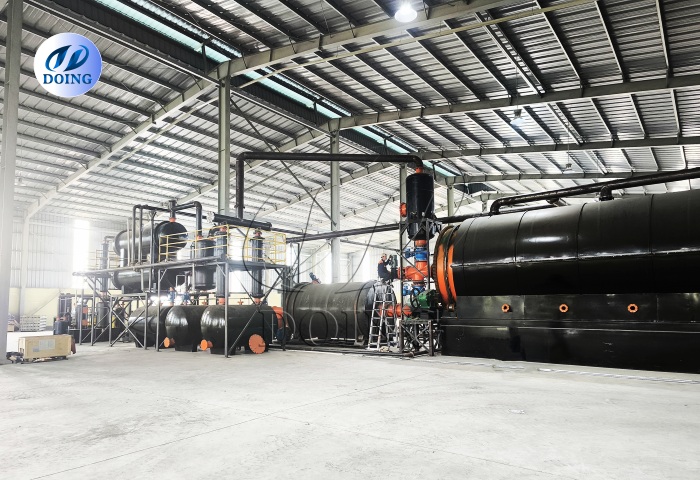 Case study of a continuous waste plastic pyrolysis equipment project
For pyrolysis project references, prioritize similarity in feedstock + capacity + process type, rather than simply choosing the supplier’s largest project.
For example, a 15 TPD oil sludge thermal pyrolysis project may be more relevant to another oil sludge project than a 50 TPD tire oil pyrolysis project, even though the latter has a larger capacity.
It should be detailed enough to prevent suppliers from interpreting the project differently, but it does not need to contain a complete equipment design. The most important information is feedstock, capacity, process type, destination, target products, compliance requirements, and quotation scope.
No. If you do not have an established engineering specification, ask the supplier to recommend suitable parameters based on your feedstock and operating requirements.
Yes. Prioritize references with similar feedstock + capacity + process type, rather than simply choosing the largest project a supplier has completed. DOING ECO has pyrolysis projects in markets including India, USA, Russia, China, Malaysia, Indonesia, Nigeria, Ghana, Mexico, Thailand, Fiji, Korea, Japan, Colombia, and others.
Doing ECO (formerly Henan Doing) provides waste recycling pyrolysis solutions based on feedstock, capacity, process requirements, and project location.
The DOING pyrolysis plant project reference portfolio spans 120+ countries and regions and includes installations processing waste tires, mixed plastics, oil sludge, biomass, and other feedstocks.
When requesting a quotation, provide your waste type, required capacity, destination, and process type. If some technical parameters are unknown, DOING ECO can recommend a suitable configuration based on the project requirements.
Leave A Message
Leave A Message