Professional·One-stop Services
Get customized solution and favorable quotes here: +86 13526692320

The fully continuous pyrolysis plant represents the most advanced tier of waste-to-energy equipment available today. Unlike batch or semi-continuous systems, a fully continuous pyrolysis plant operates around the clock with minimal interruptions — maximising throughput, reducing unit cost and delivering consistent product quality. Selecting the right manufacturer requires checking a handful of verifiable facts: ownership of a genuine production base, internationally recognised certifications, reference projects across multiple feedstocks, and clear contractual terms for installation, commissioning and after-sales support. DOING ECO — Henan Doing Environmental Protection Technology Co., Ltd — is a manufacturer that meets all of these criteria and is highlighted throughout this article as a practical example of what a serious fully continuous pyrolysis plant manufacturer looks like.
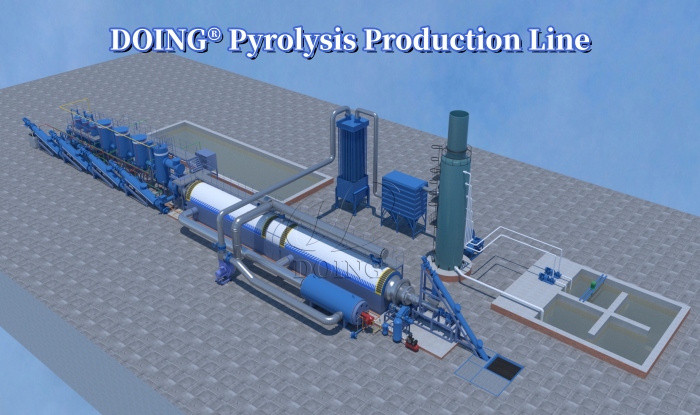
The DY-C series fully continuous pyrolysis plant handles a broad range of feedstocks including tire rubber powder, plastic granules and dewatered oil sludge. Model selection depends not only on the target daily throughput but also on feedstock condition, moisture content, wax and coke tendency, local energy availability, site footprint, applicable emission standards and downstream product handling arrangements. DOING ECO develops a matched full-line configuration proposal based on each project's actual conditions.
| Model | Design Daily Capacity | Reactor Diameter x Length | Reactor Wall Thickness | Drive Power |
|---|---|---|---|---|
| DY-C-15 | 15 t/day | 1,200 mm x 14,000 mm | 14 mm | 18.5 kW |
| DY-C-20 | 20 t/day | 1,400 mm x 18,000 mm | 16 mm | 18.5 kW |
| DY-C-30 | 30 t/day | 1,600 mm x 24,000 mm | 16 mm | 18.5 kW |
| DY-C-40 | 40 t/day | 1,800 mm x 24,000 mm | 18 mm | 18.5 kW |
| DY-C-50 | 50 t/day | 2,000 mm x 26,000 mm | 18 mm | 18.5 kW |
| Parameter | Details |
|---|---|
| Applicable feedstock | Tire rubber powder, plastic granules, oil sludge dry residue and other materials meeting continuous feeding requirements |
| Main products | Pyrolysis oil, pyrolysis carbon black, non-condensable gas |
| Oil yield | 45%-52% (for tire rubber powder; actual data varies with feedstock type and condition) |
| Control system | PLC automatic control system |
| Reactor material | Q345R / Q245R boiler plate; 304 / 316 stainless steel available per proposal |
| Wall thickness | 14 mm, 16 mm or 18 mm depending on model and design |
| Heating method | Indirect heating |
| Optional fuel | Heavy oil, natural gas, etc. |
| Cooling method | Circulating water cooling |
| Approx. footprint | Approx. 700 m2 for a 50 t/day unit (final layout per site plan) |
| Operators per shift | 1-2 persons per shift (varies with line configuration and management) |
| Design service life | 6-8 years (subject to feedstock, operation and maintenance conditions) |
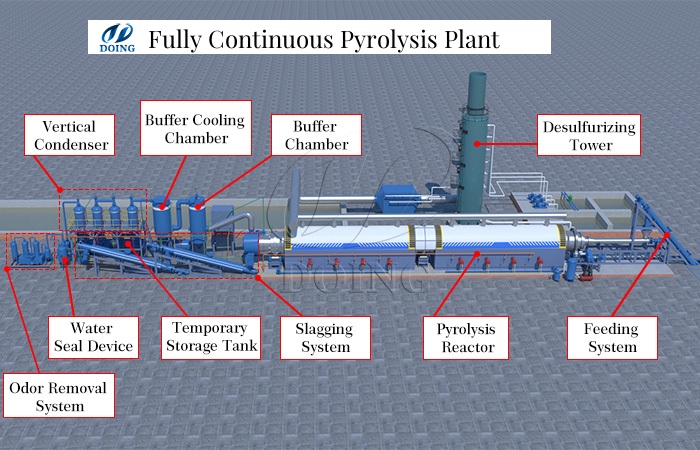
The complete fully continuous pyrolysis plant production line comprises eight core systems. These systems operate in an integrated, continuous sequence, reducing the time and energy consumption associated with frequent shutdowns, cooling and re-heating cycles.
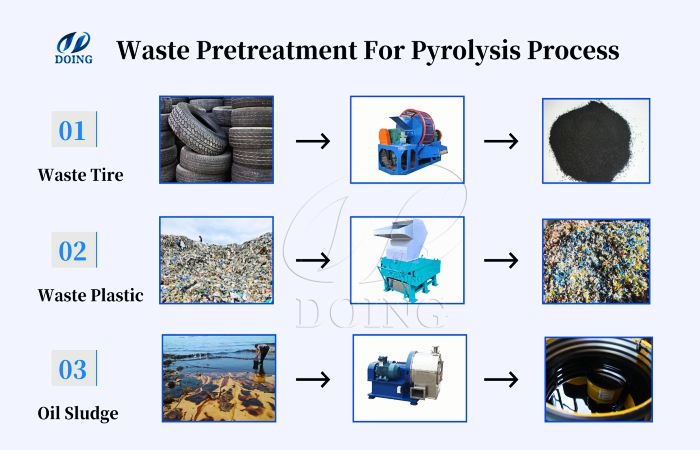
Prior to feeding, raw material is sorted, shredded, dewatered and decontaminated to achieve uniform particle size and moisture content suitable for continuous feeding. Waste tires are shredded to approximately 2 mm rubber powder with steel wire separated; waste plastics are sorted and shredded to 2-5 cm particles; oil sludge material is mechanically dewatered to below 3% moisture content.
Pre-treated material is conveyed by a hoist auger to the feed hopper and continuously introduced into the reactor via a sealed screw feeder. The entire process is airtight, ensuring stable and uniform feed, effectively isolating external air and minimising the risk of oil-gas or dust leakage to maintain continuous and stable production.
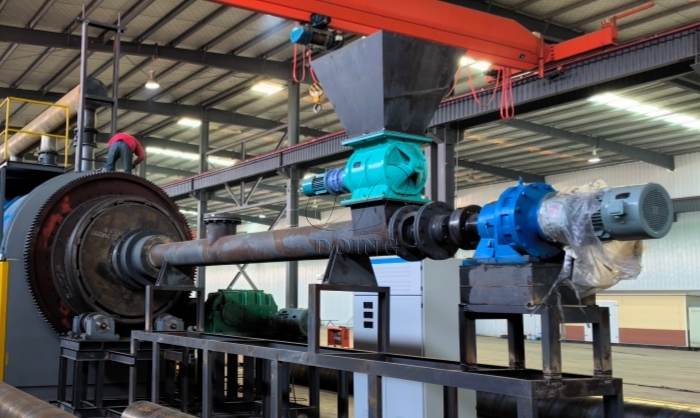
Material advances steadily through the pyrolysis reactor under indirect heating, generating oil-gas, carbon black and other products. The PLC system monitors and precisely controls feed rate, pyrolysis temperature and reactor pressure in real time, ensuring the entire pyrolysis process is continuous, controlled and stable.
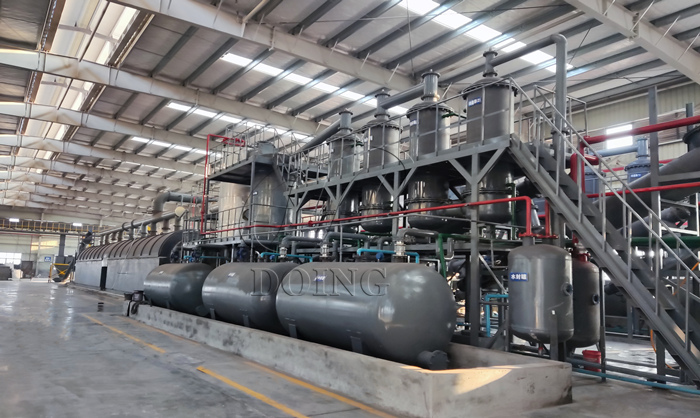
Pyrolysis oil-gas first passes through a buffer tank to stabilise flow and settle carbon black, then enters parallel condensation catalytic chambers for initial heat exchange. It subsequently flows through multiple banks of shell-and-tube condensers where circulating cooling water efficiently condenses the oil-gas into finished product, temporarily stored in tanks.
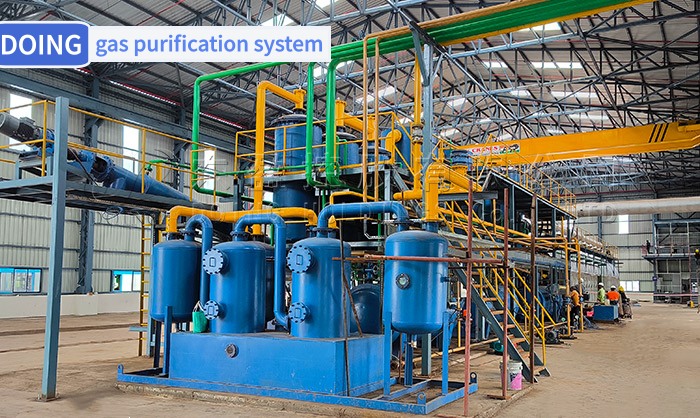
Combustible exhaust gas that cannot be condensed is fed into a desulphurisation and deodorisation system where multi-stage spray tower alkaline scrubbing removes sulphur compounds and odours. Purified non-condensable gas is recycled via pipeline as combustion fuel for the reactor, achieving energy recycling and reuse.
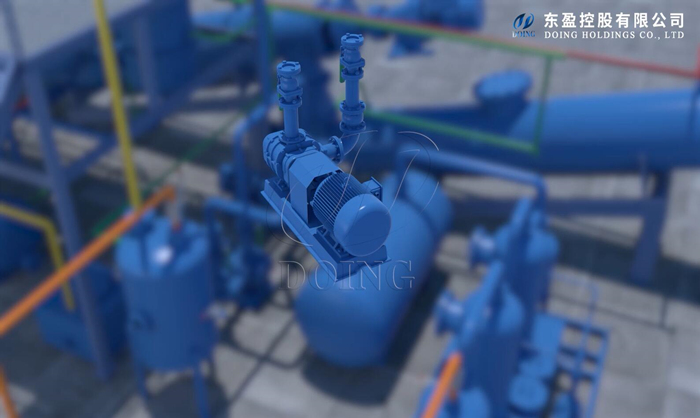
Solid residues such as carbon black generated during pyrolysis are continuously and automatically discharged via a sealed slag discharge system without shutting down the machine or interrupting continuous feeding or pyrolysis. After discharge, carbon black passes through a multi-stage cooling auger for temperature reduction and sealed dust containment, preventing high-temperature material from contacting air. The fully continuous pyrolysis production line can also be equipped with a carbon black deep-processing system: after grinding, pelletising and drying, the resulting granules have low dust content, are easy to store and transport, and can be used directly as raw material for rubber and construction industries.
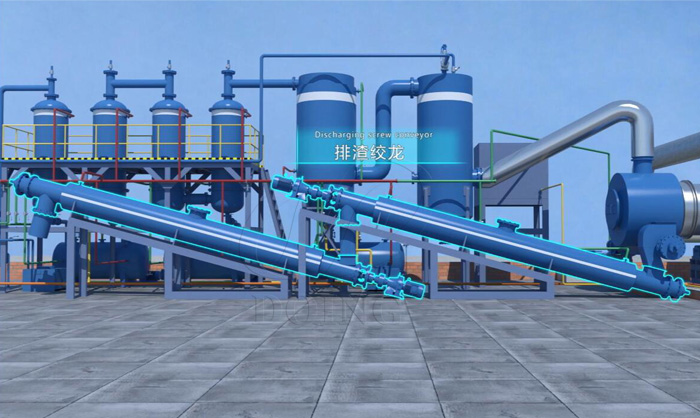
High-temperature flue gas passes through air cooling, desulphurisation and denitration, activated carbon adsorption and pulse-jet dust filtration, effectively reducing organic volatiles, particulate matter, sulphur oxides and nitrogen oxides before compliant discharge.
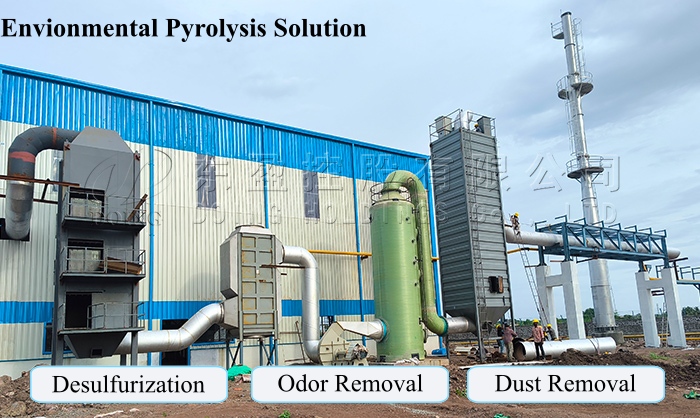
The DOING ECO fully continuous pyrolysis plant is equipped with a PLC automatic control system that centrally manages the entire process — feeding, pyrolysis, temperature control, pressure, condensation and slag discharge — with automatic fault prompts, alarms and safety interlock, reducing manual error and ensuring safe, stable and automated operation.
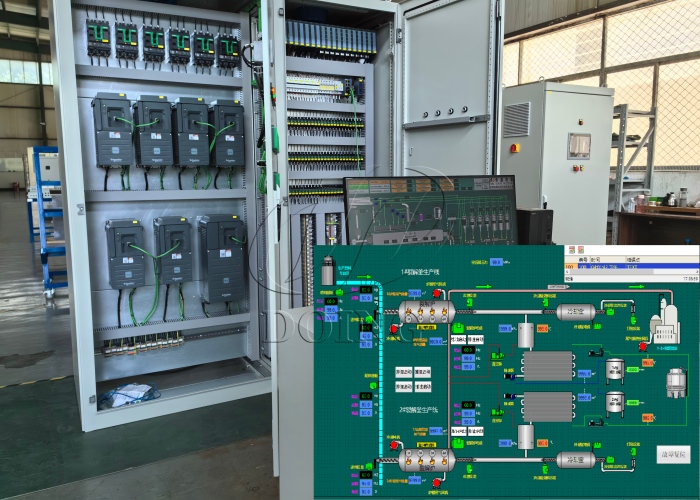
Roots blowers create a micro-negative pressure working condition that drives oil-gas to flow directionally rearward, reducing contact between carbon black and oil-gas. This lowers carbon black residual oil content, improves carbon black toluene transmittance — beneficial for downstream carbon black processing — and raises by-product added value. Non-condensable exhaust gas generated during production is purified through the exhaust gas treatment system and fed into the hot air furnace as combustion fuel, achieving exhaust gas resource recovery.
Energy balls are installed inside the continuous pyrolysis furnace. They cycle through the furnace body absorbing and releasing heat, assisting the pyrolysis reaction. Physical collision between balls continuously removes coke deposits from the furnace interior walls, effectively alleviating furnace wall coking and ensuring long-term stable equipment operation.
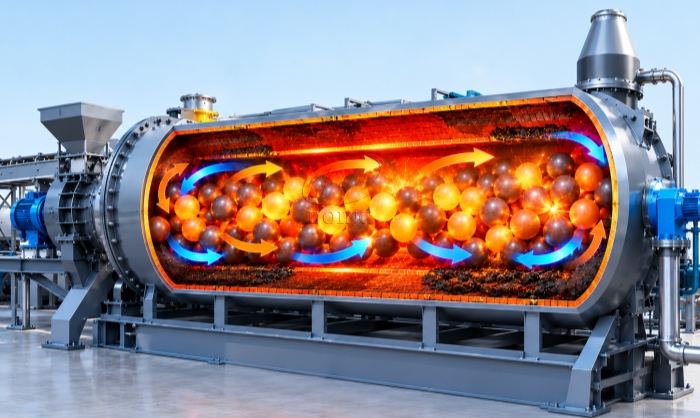
A triple-seal design avoids flue gas leakage risk: material pile-up sealing at the feed and slag discharge positions; graphite braided seals at the dynamic and static component junctions such as the feed auger to furnace liner and the fixed section to furnace liner; and fish-scale spring seals between furnace liner and furnace shell, simultaneously achieving leak prevention and thermal insulation. This structure is equally applicable to fully and semi-continuous pyrolysis plant.
The DOING ECO DY-C-40 continuous solid hazardous waste pyrolysis treatment plant has been selected for inclusion in the Catalogue of Energy-Saving, Water-Saving and Solid Waste Comprehensive Utilisation Technologies and Equipment in Henan Province's Industrial Sector (2024 Edition), issued by the Henan Provincial Department of Industry and Information Technology. Selection criteria are stringent, requiring enterprise application, local authority recommendation, multiple rounds of expert review and public notice. Inclusion represents provincial-level official recognition of DOING ECO's pyrolysis plant technology, operational stability, environmental and energy efficiency benefits and industrialisation capability.
Beyond product-specific certifications, DOING ECO has been recognized as a High-Tech Enterprise and an Innovative Enterprise.
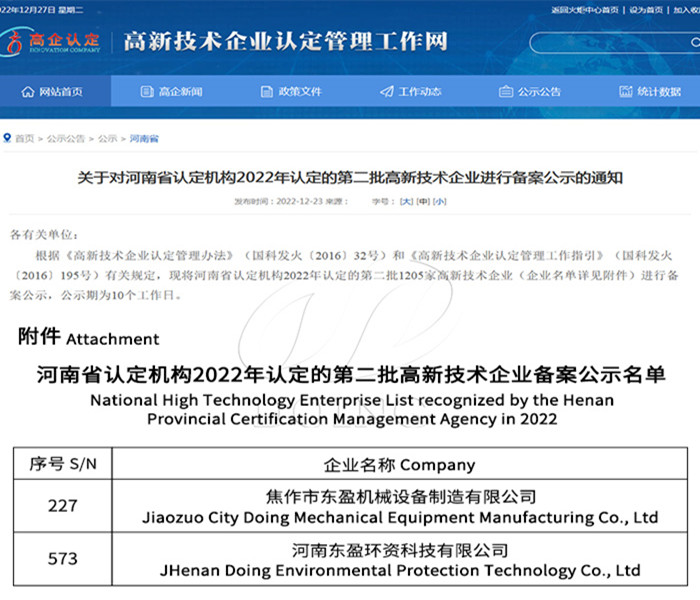
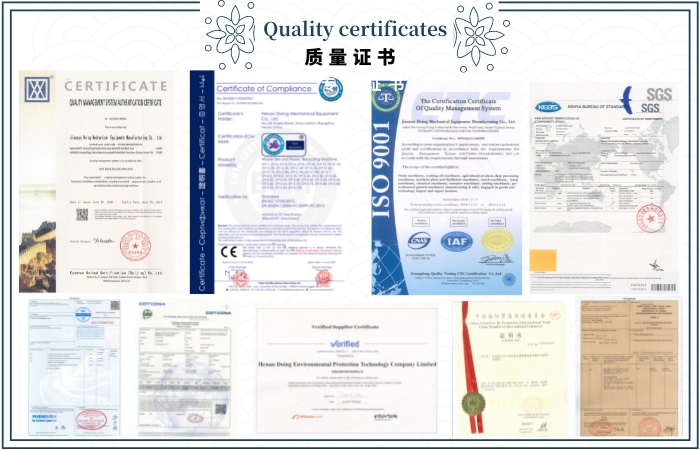
For international buyers, DOING ECO holds internationally recognised certifications that provide verifiable quality assurance. Buyers are encouraged to request certificate copies bearing numbers and validate them directly with the issuing bodies before committing.
| Certification / Credential | Scope | Issuing / Registrar | Remarks |
|---|---|---|---|
| ISO 9001 | Quality Management System — covers R&D, raw material sourcing, manufacturing, testing and after-sales | Accredited registrar (annual external audit) | Verifiable via ISO body online directory |
| ISO 14001 | Environmental Management System — covers manufacturing process environmental controls | Accredited registrar (annual external audit) | Verifiable via ISO body online directory |
| CE Marking | Machinery Directive (safety of complete unit incl. reactor, feed/discharge, structural guards) | Notified body / self-declaration | Required for EU market entry |
| CE Marking | Low Voltage Directive (electrical safety: control cabinets, motors, sensors, wiring) | Notified body / self-declaration | Required for EU market entry |
| CE Marking | ATEX Directive (equipment in potentially flammable gas atmospheres — relevant to pyrolysis reactor environment) | Notified body / self-declaration | Required for EU market entry |
| CE Marking | Pressure Equipment Directive (reactor vessel, vapour lines, condensers) | Notified body / self-declaration | Required for EU market entry |
| SGS Third-Party Inspection | Structural integrity, rated throughput, product yields, emission concentrations, operating noise levels | SGS or equivalent recognised inspection body | Specific to equipment serial number |
In addition, DOING ECO has been recognised as a National High-Tech Enterprise and Innovative Enterprise, with a technical team holding more than 49 patents including patented safety and environmental-protection devices. The DOING ECO fully continuous pyrolysis plant has been successfully exported to customers in over 120 countries.
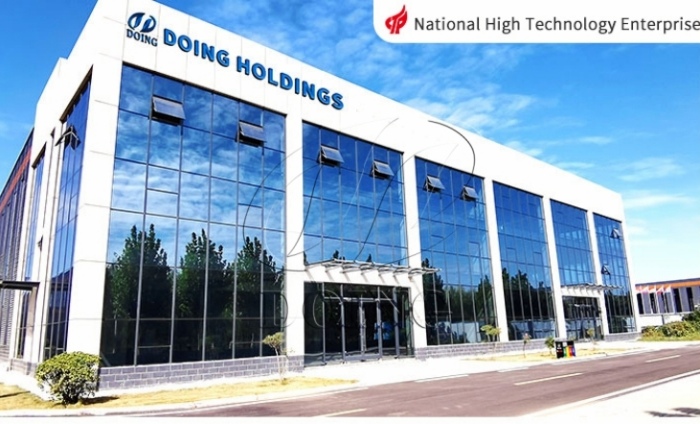
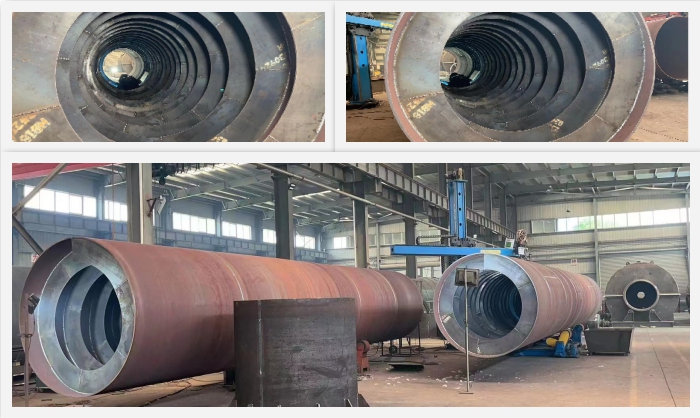
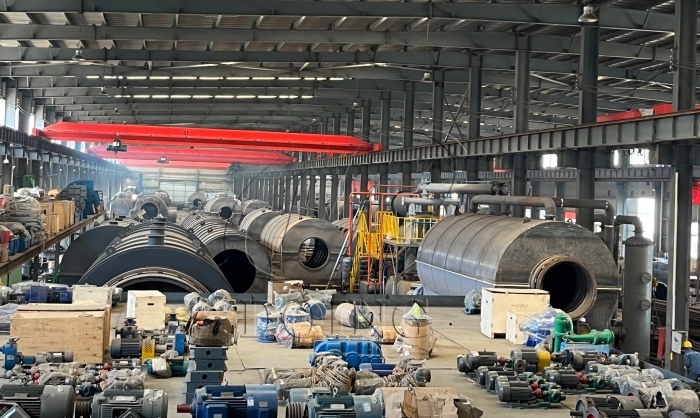
DOING ECO operates a sales and operations centre in Zhengzhou, with its production manufacturing base located in Jiaozuo, Henan Province. The base covers approximately 40,000 m2 and houses multiple production workshops equipped with complete machining, welding, assembly and inspection equipment. More than 50 production and technical staff are employed on site, along with a dedicated process laboratory offering free incoming material testing and analysis services. During the equipment selection phase, material pyrolysis performance and product quality can be verified, ensuring scientifically matched project proposals and reducing investment risk.
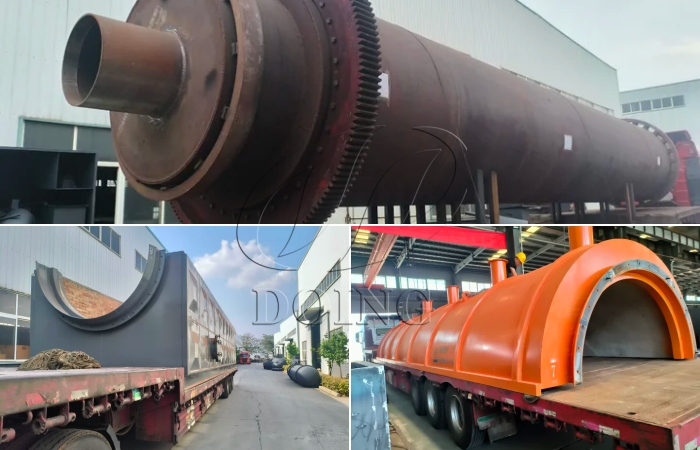
All key components of the DOING ECO fully continuous pyrolysis plant — reactor body, feeding system, slag discharge system and all other ancillary parts — are produced, assembled and factory-inspected at the Jiaozuo manufacturing base. International buyers are welcome to visit in person, inspecting production progress, core component materials, fabrication processes and factory inspection procedures directly.
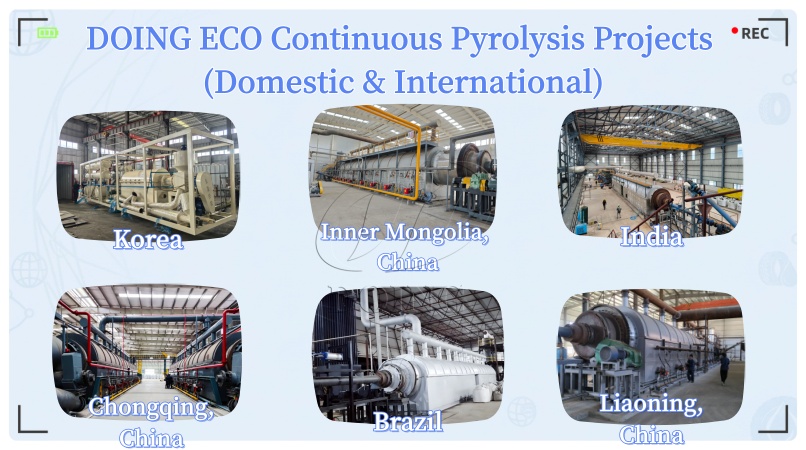
DOING ECO's fully continuous pyrolysis plant has been successfully deployed across Asia, Africa, Europe, the Americas and beyond, demonstrating mature international project coordination and execution capability. The equipment handles a wide range of feedstocks. In addition to waste tires, DOING ECO has addressed the challenges of wax-forming and coking waste plastics, oil-based drilling cuttings, oil sludge and other difficult hazardous wastes — overcoming coking and wall-adhesion during pyrolysis, furnace corrosion and continuous operation difficulties — setting a new benchmark for hazardous waste treatment.
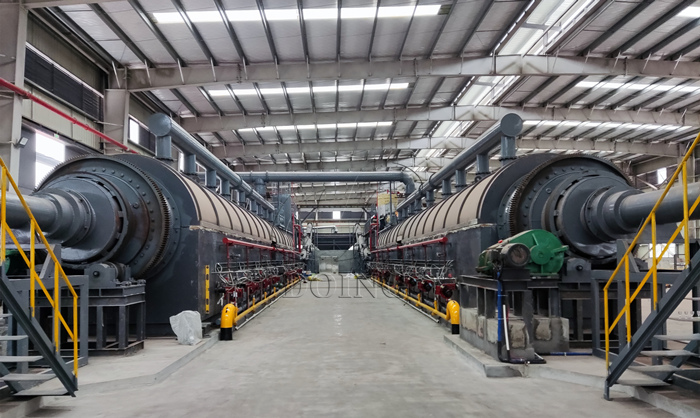
Location: Chongqing, China | Feedstock: Waste tires | Equipment: 2 * DY-C-50 | Year: 2021 | Capacity: 100 T/day / 36,000 T/yr | Status: Operating more than 5 years
The Chongqing project is DOING ECO's first 100-tonne-level fully continuous pyrolysis plant production line, commissioned in 2021. The line uses two DY-C-50 units operating in parallel, with a design daily capacity of 100 tonnes and annual capacity of approximately 36,000 tonnes. The project has been running stably for more than five years. As DOING ECO's earliest 100-tonne-level fully continuous pyrolysis project, the Chongqing installation provided invaluable real-world operating experience that has informed subsequent process optimisation and engineering delivery for 100-tonne production lines.
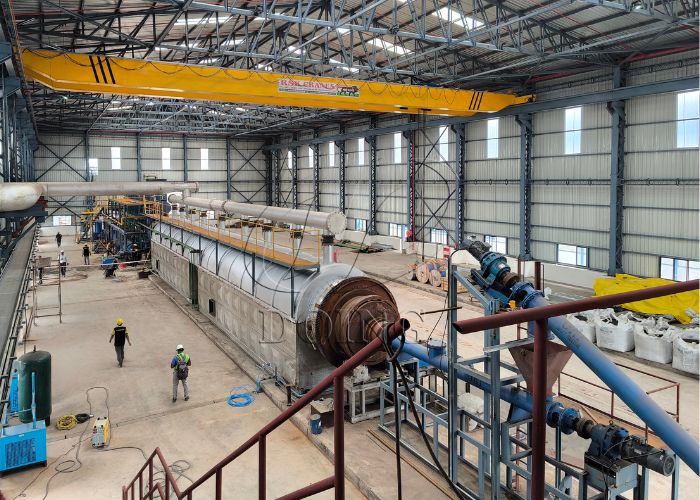
Location: India | Feedstock: Waste tires (rubber powder) | Equipment: DY-C-50 | Year: 2025 | Capacity: 50 T/day / 18,000 T/yr | Status: Operating
India has abundant waste tyre resources and strong potential for recycling end-of-life tyres into fuel oil and carbon black. One of India's leading reclaimed rubber companies sought to scale its operations and explore innovative waste-to-energy solutions. After a detailed assessment and comparison with competing suppliers, the client selected DOING ECO's continuous tyre pyrolysis plant for its proven performance and competitive pricing. Representatives visited two operating DOING ECO sites on 29 April 2023 to observe the equipment under real working conditions, and signed a contract with DOING ECO on 23 November 2023. The 50 t/day fully continuous pyrolysis unit was installed and completed in July 2025.
The installed unit processes rubber powder feedstock with PLC temperature control set at 300-400 degrees C. Key modules include the pyrolysis reactor, condensation system, safety water-seal system, oil storage and transport system, automatic slag discharge system, exhaust gas treatment system, smoke treatment system and heavy oil burner providing the necessary process heat. Front-end steel wire removal recovers over 98% of the wire content. The successful commissioning of this project demonstrates DOING ECO's capability to deliver large-scale, fully continuous pyrolysis plant that meets local regulatory requirements and operates reliably under demanding conditions. Being selected by an Indian reclaimed rubber enterprise also validates the DY-C-50's suitability for the Indian market and its alignment with India's government-promoted tyre recycling policy.
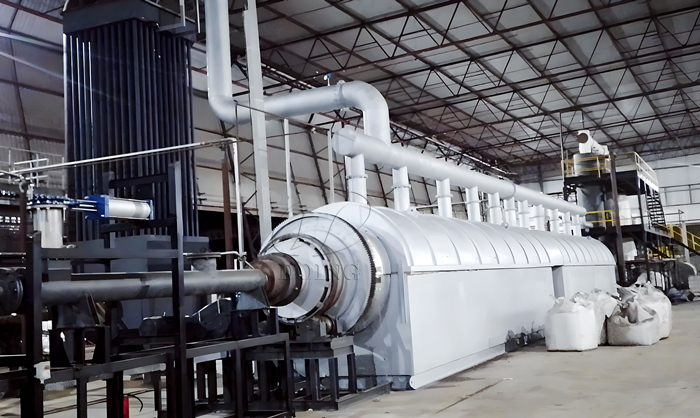
Location: Brazil | Feedstock: waste plastic | Equipment: DY-C-50 | Year: 2025 | Capacity: 50 T/day / 18,000 T/yr | Status: Operating
The Brazil waste plastic continuous pyrolysis project, commissioned in 2025, uses a DY-C-50 unit with a design daily capacity of 50 tonnes and annual capacity of approximately 18,000 tonnes. Brazil's waste plastic supply is dominated by packaging film, agricultural film and municipal plastic waste — materials that are heterogeneous in composition and prone to wax formation and coking, imposing stringent requirements on equipment sealing and continuous operation. The DOING ECO DY-C-50 series, equipped with catalytic pyrolysis, micro-negative pressure process and multi-layer composite sealing, achieves continuous stable operation. The project's successful delivery validates the equipment's ability to run continuously on waste plastic feedstock under Latin American working conditions and represents a landmark reference project for DOING ECO in the Latin American market.
Location: South Korea | Feedstock: Waste plastics | Equipment: Custom model | Year: 2025 | Capacity: 1 T/day / 360 T/yr | Status: Operating
The South Korea project, commissioned in 2025, is a custom small-scale fully continuous waste plastic pyrolysis refining unit with a design daily capacity of 1 tonne. It demonstrates DOING ECO's ability to support small-scale and customised production line requirements. The DY-C series fully continuous waste plastic pyrolysis plant process route can support large-scale commercial production lines as well as customer needs that start with small-scale trials before gradually scaling up capacity — catering to clients who prefer a step-by-step approach to capacity expansion.
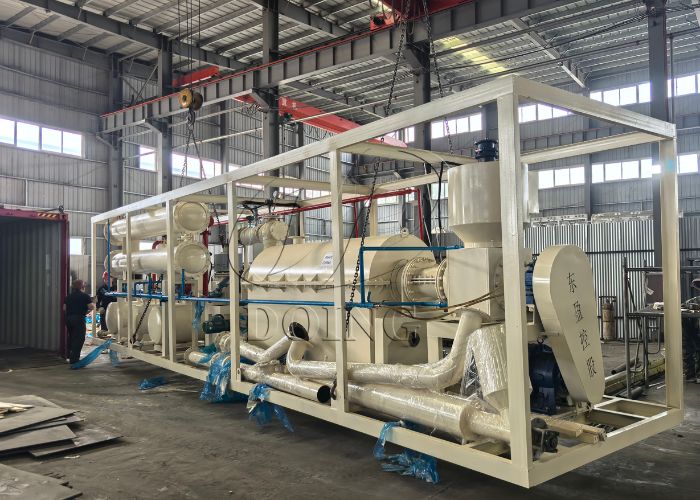
Location: Inner Mongolia, China | Feedstock: Oil-based drilling cuttings | Equipment: DY-C-20 (custom electric heating) | Year: 2026 | Capacity: 20 T/day / 7,200 T/yr | Status: Operating
This hazardous waste disposal project, commissioned in 2026 in Inner Mongolia, China, processes oil-based drilling cuttings — classified as HW08 hazardous waste — which present high disposal difficulty: high viscosity and strong tendency to coke and form wax deposits. The fully continuous pyrolysis plant used in this project is model DY-C-20, with a design daily capacity of 20 tonnes and custom electric heating. This project validates DOING ECO's custom design capability for high-difficulty hazardous waste feedstocks and confirms the equipment's stable processing performance with high-viscosity, coking-prone materials.
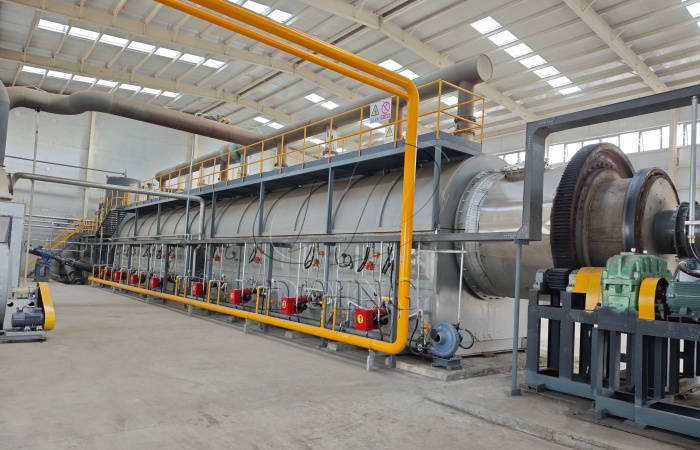
Location: Poland | Feedstock: Waste tires | Equipment: 2 * DY-C-50 | Year: 2026 | Capacity: 100 T/day / 36,000 T/yr | Status: Commissioning
The Poland project, commissioned in 2026, is DOING ECO's first 100-tonne-level fully continuous pyrolysis plant production line exported to Europe. Two DY-C-50 units operate in parallel, with a design daily capacity of 100 tonnes and annual capacity of 36,000 tonnes. The DOING ECO fully continuous pyrolysis plant meets EU CE certification requirements, with design and manufacturing fully compliant with applicable EU electrical and environmental safety standards. The project is currently in pre-commissioning stage. As DOING ECO's first 100-tonne-level fully continuous pyrolysis production line exported to Europe, this project — covering international transport, localised installation and commissioning — validates DOING ECO's ability to gain market access and execute cross-border delivery of 100-tonne-level complete equipment sets in the high-threshold EU market.
| Country / Region | Year | Feedstock | Equipment Model | Design Capacity | Project Status |
|---|---|---|---|---|---|
| Chongqing, China | 2021 | Waste tires | 2xDY-C-50 | 100 t/day, 36,000 t/yr | Operating >5 years |
| Kazakhstan | 2021 | Waste tires | DY-C-30 | 30 t/day, 10,800 t/yr | Operating |
| Brazil | 2022 | Waste tires | DY-C-50 | 50 t/day, 18,000 t/yr | Operating |
| Russia | 2022 | Waste tires | DY-C-50 | 50 t/day, 18,000 t/yr | Operating |
| Chongqing, China | 2023 | Waste tires | 2xDY-C-50 | 100 t/day, 36,000 t/yr | Operating |
| Liaoning, China | 2023 | Waste tires | 2xDY-C-50 | 100 t/day, 36,000 t/yr | Operating |
| Chongqing, China | 2023 | Waste tires | DY-C-40 | 40 t/day, 14,400 t/yr | Operating |
| India | 2023 | Waste tires | DY-C-30 | 30 t/day, 10,800 t/yr | Operating |
| Shanxi, China | 2023 | Waste tires | DY-C-50 | 50 t/day, 18,000 t/yr | Operating |
| Shandong, China | 2024 | Waste tires | DY-C-50 | 50 t/day, 18,000 t/yr | Operating |
| USA | 2024 | Waste tires | DY-C-50 | 50 t/day, 18,000 t/yr | Operating 2+ years |
| Shandong, China | 2024 | Oil-based cuttings | DY-C-50 | 50 t/day, 18,000 t/yr | Operating |
| India | 2025 | Waste tires | DY-C-50 | 50 t/day, 18,000 t/yr | Operating |
| Shandong, China | 2025 | Waste tires | DY-C-50 | 50 t/day, 18,000 t/yr | Operating |
| Brazil | 2025 | Waste plastics | DY-C-50 | 50 t/day, 18,000 t/yr | Operating |
| Romania | 2025 | Waste plastics | DY-C-15 | 15 t/day, 5,400 t/yr | Installed |
| South Korea | 2025 | Waste plastics | Custom | 1 t/day, 360 t/yr | Operating |
| Inner Mongolia, China | 2026 | Oil-based cuttings | DY-C-20 (custom electric heating) | 20 t/day, 7,200 t/yr | Operating |
| Poland | 2026 | Waste tires | 2xDY-C-50 | 100 t/day, 36,000 t/yr | Commissioning |
| Inner Mongolia, China | 2026 | Oil sludge | DY-C-50 | 50 t/day, 18,000 t/yr | Operating |
A fully continuous pyrolysis plant comprises multiple integrated systems. After manufacturing is complete, a series of steps — transport, on-site installation, commissioning, operator training and trial run — must be completed before formal production begins. DOING ECO strictly follows the project contract and mutually confirmed technical proposal to provide clients with complete project execution and after-sales service.
Before the project officially starts, DOING ECO verifies the feedstock type, form, particle size, moisture content, impurities, supply volume and daily processing scale. Site area, workshop conditions, utilities and fuel supply, local policy requirements and investment plan are also discussed to form the basis for equipment selection.
With client project information confirmed, DOING ECO develops a tailored process route and equipment configuration covering raw material preprocessing, continuous feeding, pyrolysis, condensation, slag discharge, environmental treatment and automatic control. Outputs include the fully continuous pyrolysis plant model, workshop layout, footprint and water, electricity, fuel and personnel requirements.
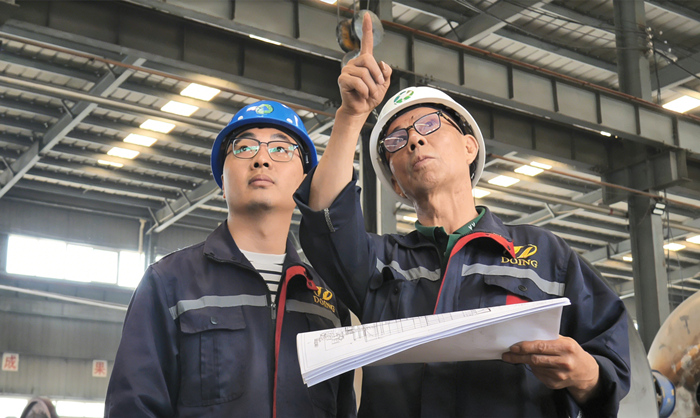
After the technical proposal is confirmed, DOING ECO's manufacturing base proceeds with raw material procurement, equipment processing, system assembly and quality inspection, with progress updates provided as agreed. On completion, the client may conduct factory acceptance on-site or remotely. After inspection approval, parts are labelled, packed and loaded for transport.
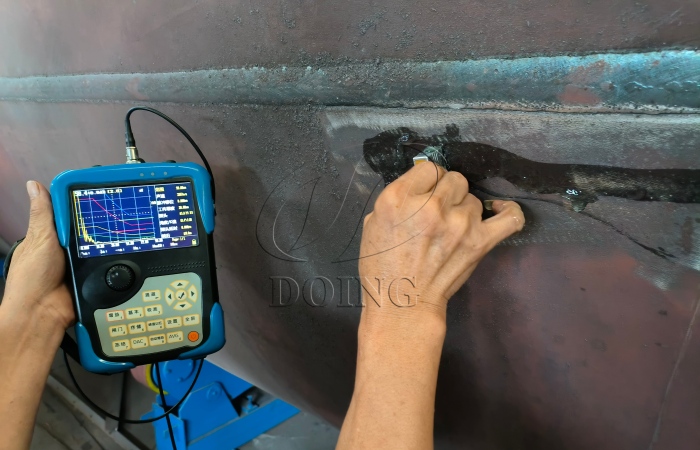
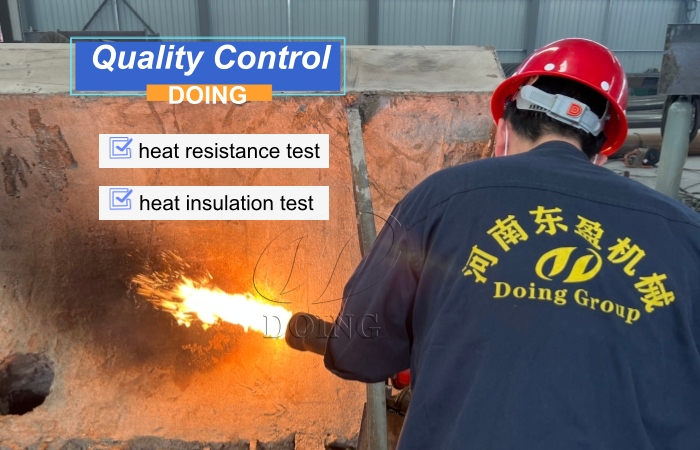
Upon equipment arrival at site, DOING ECO provides on-site or online technical guidance per the contract. After mechanical installation, technicians conduct single-machine tests, integrated system tests and a full trial run. Client operators receive hands-on training covering start-up and shutdown procedures, PLC control, safe working practices, routine inspection, maintenance and common fault handling.
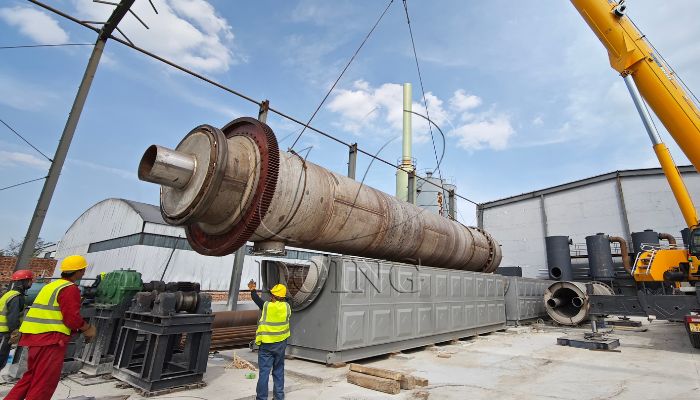
Following equipment handover, DOING ECO provides remote technical support, fault diagnosis, maintenance guidance and genuine spare parts supply per the contract.
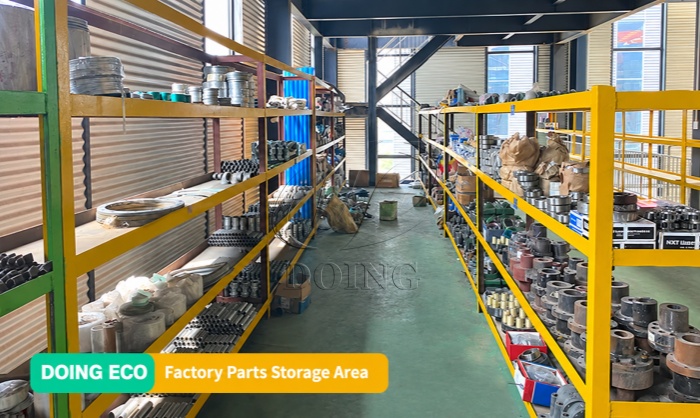
DOING ECO offers a complete industrial chain capability, providing clients with an integrated closed-loop solution: feeding - pyrolysis - condensation - slag discharge - product deep-processing. Beyond the main pyrolysis furnace, the company can configure the full line — including shredding, sealed feeding, enclosed slag discharge, flue gas treatment and pyrolysis oil refining — and deliver it as a turnkey package covering engineering design, manufacturing, on-site installation and commissioning, operator training and ongoing operations support. Buyers interested in a hazardous waste pyrolysis project are welcome to share their feedstock conditions, site details and project plans for a customised line configuration proposal.
Leave A Message
Leave A Message