Professional·One-stop Services
Get customized solution and favorable quotes here: +86 13526692320

In waste tire, plastic, and biomass pyrolysis projects, choosing the right pyrolysis plant heating solution directly affects operating costs, environmental compliance, maintenance workload, and long-term plant stability.Many customers ask whether natural gas burners can replace traditional fuel oil burners.Technically, the answer is yes.
Compared with fuel oil systems, a natural gas heating system for waste pyrolysis plants offers cleaner combustion, easier maintenance, more stable temperature control, lower sulfur emissions, and easier environmental compliance.
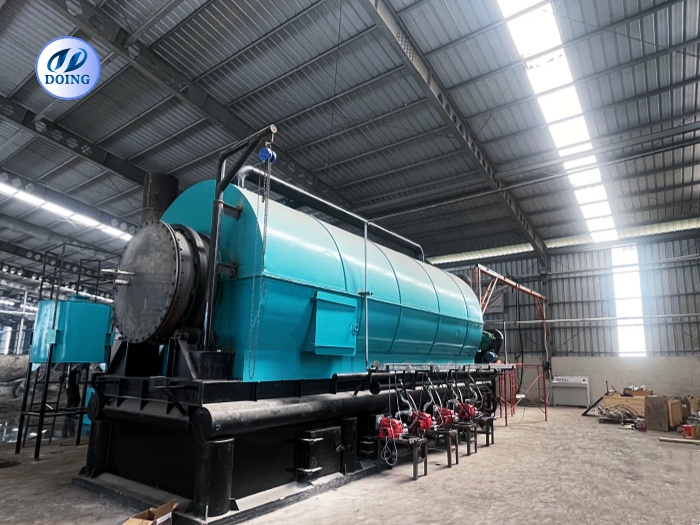 Waste pyrolysis equipment equipped with burners
In recent years, more waste tire pyrolysis plants and plastic pyrolysis projects have started choosing natural gas heating systems, especially in regions with stable gas supply and stricter environmental regulations.
However, as a professional pyrolysis equipment manufacturer, Henan DOING Company does not recommend designing a fuel oil heating system first and then converting it to natural gas later.
Although conversion is technically feasible, the retrofit process usually requires major modifications to the burner system, gas pipelines, pressure regulation units, combustion chamber, and safety control system.
This not only increases project costs and installation time but may also affect the long-term stability of the pyrolysis reactor heating system.
Therefore, we strongly recommend that customers communicate with our engineering team at the early stage of the project to determine the most suitable heating fuel according to local energy conditions.
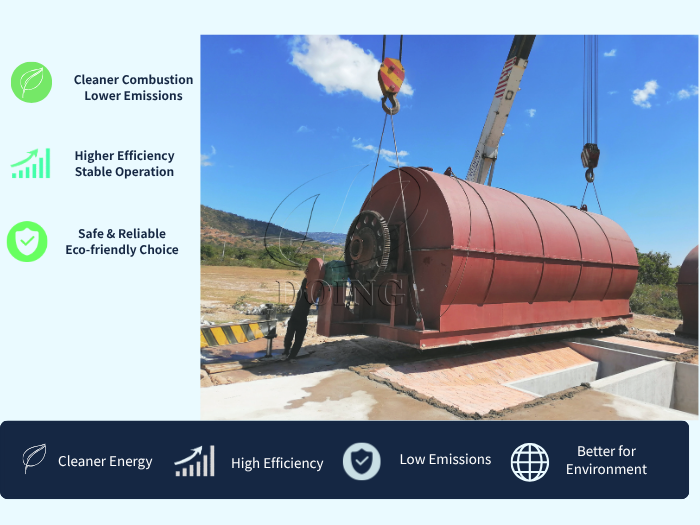 Advantages of equipping pyrolysis equipment with natural gas burners
Henan DOING equipment is designed to support multiple heating fuels, including:
1. Natural gas
2. Fuel oil / Diesel
3. Coal
4. Recycled syngas
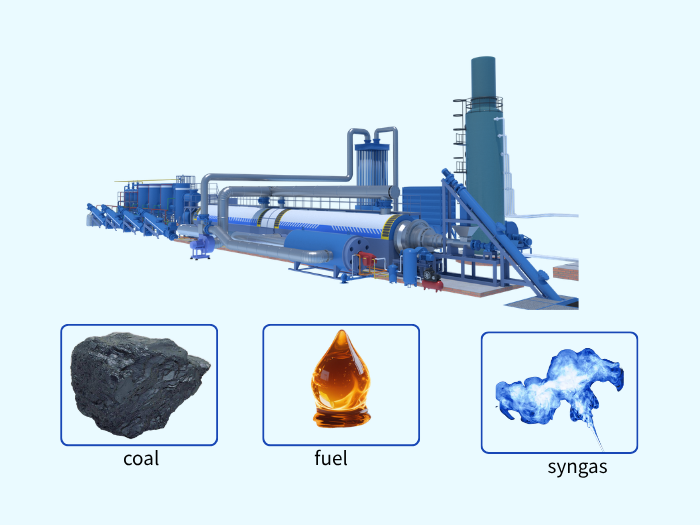 Different types of fuel for pyrolysis equipment
We do not promote a single fuel type. Instead, our engineering team helps customers choose the most economical and practical pyrolysis reactor heating solution based on local fuel prices, supply stability, environmental requirements, and operating cost targets.
This helps customers reduce long-term operating costs while maintaining stable pyrolysis plant operation.
Different pyrolysis systems require different burner configurations to ensure stable reactor heating and thermal balance.
Batch Pyrolysis Plant
DOING batch pyrolysis plants are typically equipped with one main heating burner and one tail gas burner. After reactor startup, the non-condensable syngas generated during pyrolysis can be recycled as auxiliary fuel, helping reduce external fuel consumption.
Fully Continuous Pyrolysis Plant
DOING fully continuous pyrolysis plants are generally equipped with one main burner and two tail gas burners to maintain stable heat input and thermal balance during continuous operation.
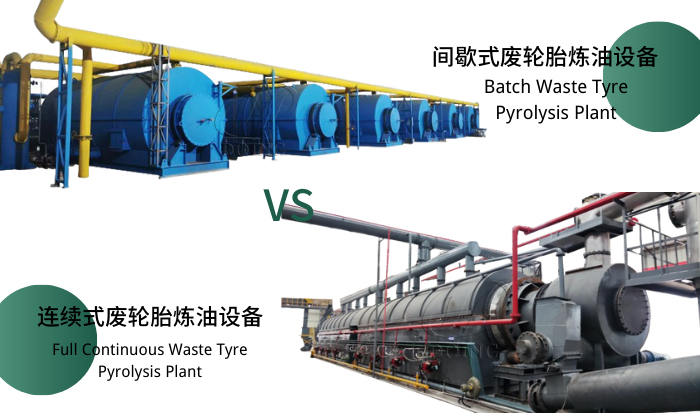 Batch pyrolysis equipment vs fully continuous equipment
The optimal heating method depends on several factors, such as:
1. Local fuel availability and price
2. Supply stability
3. Environmental regulations
4. Project scale
5. Operating cost targets
For example, customers with access to stable and affordable natural gas may benefit from gas heating systems, while customers in remote areas may prefer diesel or fuel oil systems.
With more than 15 years of experience in pyrolysis equipment manufacturing, Henan DOING can provide customized reactor heating solutions tailored to different project conditions.
 DOING Company Pyrolysis Solution Provider Service
Our engineering team can recommend the most suitable heating configuration according to local fuel conditions, project capacity, environmental requirements, and operating goals.
If you are planning a new pyrolysis project or considering a heating system upgrade, welcome to contact DOING for professional technical support and customized pyrolysis plant heating solutions.
Leave A Message
Leave A Message