Professional·One-stop Services
Get customized solution and favorable quotes here: +86 13526692320

Nowdays, waste tire pyrolysis technology is widely used in environmentally friendly recycling and revenue generation of waste tires. A waste tire pyrolysis project does not rely on the sale of a single product; instead, it involves the co-production of multiple products, thereby establishing a diversified revenue structure.
Through high-temperature, oxygen-free thermal decomposition, waste tires are transformed into high-value products: pyrolysis oil, carbon black, steel wire, and combustible gas. Typically, in advanced pyrolysis equipment, every ton of waste tires yields approximately 40–45% pyrolysis oil, 30–35% carbon black, 10–15% steel wire, and 5–10% combustible gas. This process effectively achieves the resource recovery, energy conversion, and harmless disposal of waste materials.
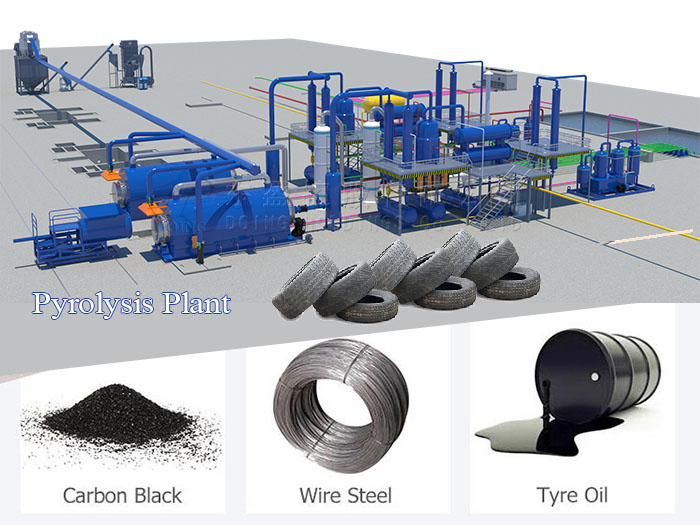 Products of the Waste Tire Pyrolysis Equipment Project
1. Pyrolysis Oil: The Core Revenue Product
Waste tire pyrolysis oil is a combustible liquid fuel with a high calorific value, comparable to industrial fuel oil or diesel. Priced at approximately USD 500 per ton, it can be used directly as an industrial fuel in combustion equipment — such as boilers, kilns, and heating furnaces — serving as a substitute for heavy oil or coal. It can also be utilized as fuel in power plants or for generating electricity via diesel generators. Furthermore, through subsequent refining and purification, it can be converted into non-standard diesel fuel, suitable for use in applications such as marine vessels and heavy machinery.
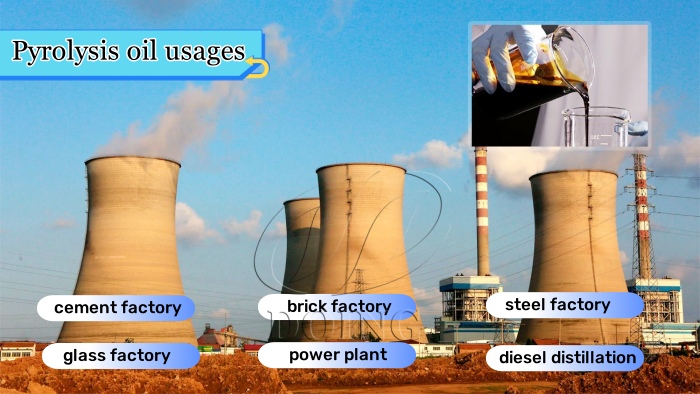 Applications of Pyrolysis Oil Produced by Waste Tire Pyrolysis Equipment
2. Carbon Black: A High-Value-Added Byproduct
Pyrolysis carbon black consists of the residual carbon black originally present in the tires; it features fine particle size and possesses a certain degree of chemical activity. It is priced at approximately USD 50–180 per ton. Crude Carbon Black: Can be utilized in construction materials (e.g., as a coloring agent for cement and bricks), asphalt modification, and as a filler in rubber products (excluding tires—e.g., hoses, conveyor belts, shoe soles, etc.). Refined Carbon Black: Through deep processing (such as activation and granulation), its performance can approach or meet the standards of certain industrial carbon blacks, allowing it to be used in the production of high-end rubber products, inks, coatings, plastics, and other materials with higher added value.
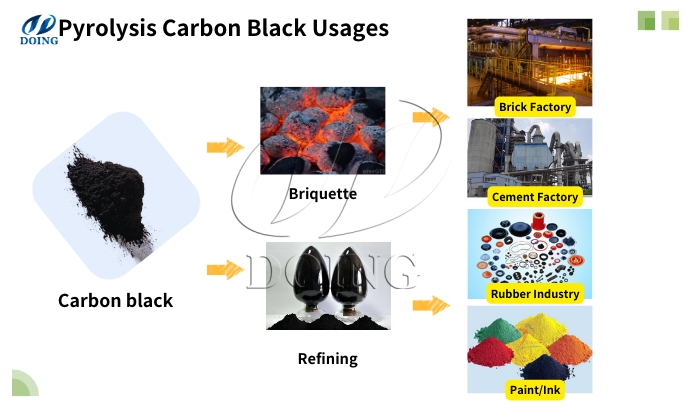 Applications of Carbon Black from Waste Tire Pyrolysis Equipment
3. Steel Wire: A Stable, Recyclable Metal
The steel wire contained within the waste tires is completely separated during the pyrolysis process, resulting in a product of high purity. The price is approximately USD 215 per ton; it can be sold directly to steel mills or foundries as scrap steel feedstock for remelting and smelting, thereby achieving resource recycling.
4. Combustible Gas: The Key to Lowering Operational Costs
This gas can be recovered and utilized via a combustion system to serve as a heat source for the pyrolysis reactor. By replacing fuel oil or natural gas, it significantly reduces the project's operating costs. Furthermore, if the gas output is substantial and stable, and under appropriate conditions, it can be utilized within the facility itself.
Beyond the direct sale of products, waste tire pyrolysis projects generate additional added value:
1. Environmental Subsidies and Carbon Credits: Many countries and regions offer policy support, environmental subsidies, or carbon reduction credits for waste resource utilization projects, providing the project with additional revenue streams.
Globally, vast quantities of waste tires are generated annually, placing immense pressure on the environment. Traditional disposal methods—such as stockpiling or incineration — not only pollute the environment but also constitute a significant waste of resources. The tire pyrolysis process can reduce the volume of waste tires while strictly controlling exhaust emissions during the treatment process, thus reducing gas pollution and carbon dioxide production. Therefore, by setting up waste tire recycling pyrolysis project, you may get some subsidies and waste treatment fees.
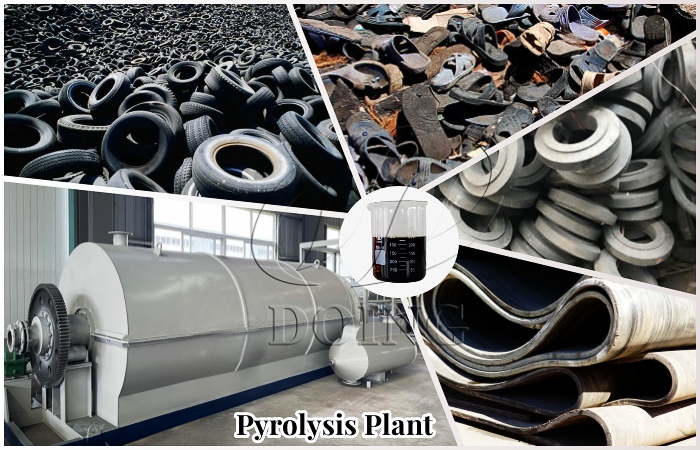 Waste Tire Pyrolysis-to-Oil Projects
2. Social Benefits and Corporate Image: Actively participating in environmental protection initiatives enhances corporate social responsibility and brand image, helping to garner recognition from both the government and the public.
3. A Model for the Circular Economy: Transforming waste into valuable resources aligns with the philosophy of circular economic development and ensures long-term sustainability.
High-quality pyrolysis equipment is the key to achieving high yields, high efficiency, and high profitability for setting up waste tire pyrolysis project. Henan DOING Company has specialized in pyrolysis technology for many years; thanks to their exceptional performance, our equipment enables clients to maximize the revenue generation of a tire pyrolysis project:
1. High Efficiency and High Oil Yield: By employing unique catalytic cracking technology and an optimized reactor design, we ensure the efficient conversion of waste tires in the shortest possible time. Compared to traditional equipment, our system boosts oil yields by 5–10%, directly increasing revenue from core products.
2. Stable Product Quality and Strong Market Competitiveness: A precise temperature control system and an efficient multi-stage condensing system ensure the stable quality of the pyrolysis oil — characterized by low moisture and impurity levels, as well as a high calorific value — making it highly sought after in the market and commanding a premium price. Additionally, the quality of the carbon black produced is optimized for subsequent processing and sales.
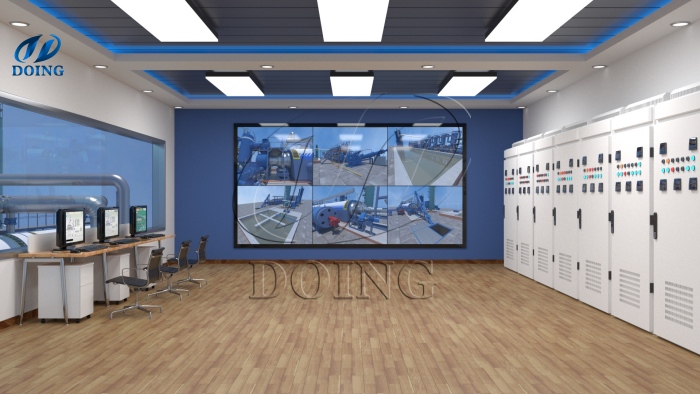 Waste Tire Pyrolysis Oil Equipment PLC Control System
3. Safety, Environmental Protection, and Regulatory Compliance: Our equipment strictly adheres to national and international environmental standards. We utilize a multi-stage waste gas purification system, explosion-proof and flame-arresting devices, and an automatic alarm system to ensure zero pollution, zero emissions, and the highest levels of safety throughout the production process. For instance, our company holds patents for our proprietary tail gas treatment equipment; our flue gas desulfurization and dust removal system is capable of meeting ultra-low emission standards.
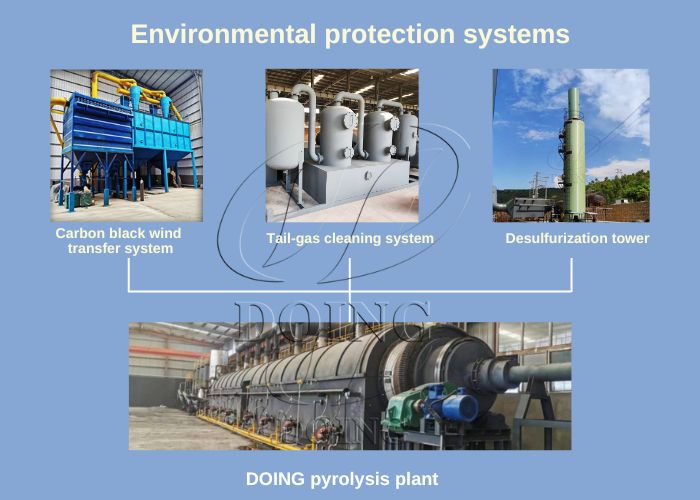 Environmental Protection Features of Waste Tire Pyrolysis Equipment
4. Automation and Low Energy Consumption: We offer a variety of tire pyrolysis equipment, including relatively low-cost batch tire pyrolysis equipment, cost-effective semi-continuous tire pyrolysis machine, and fully continuous pyrolysist system capable of 24-hour intelligent operation, saving labor costs.
Whichever type you choose, we can provide a customized equipment configuration plan based on your project needs, making the most of your investment. Furthermore, our unique waste heat recovery and combustible gas self-heating technologies minimize energy consumption — achieving true energy self-sufficiency and even generating surplus gas, reducing tire pyrolysis machine operation investment cost.
5. Durable Equipment, Simple Maintenance: We utilize high-strength, heat-resistant alloy steels combined with exquisite manufacturing techniques — such as the elliptical design of our reactor heads — to ensure a long service life for the equipment. The modular design and user-friendly interface make routine maintenance and troubleshooting more convenient, thereby lowering long-term operating costs.
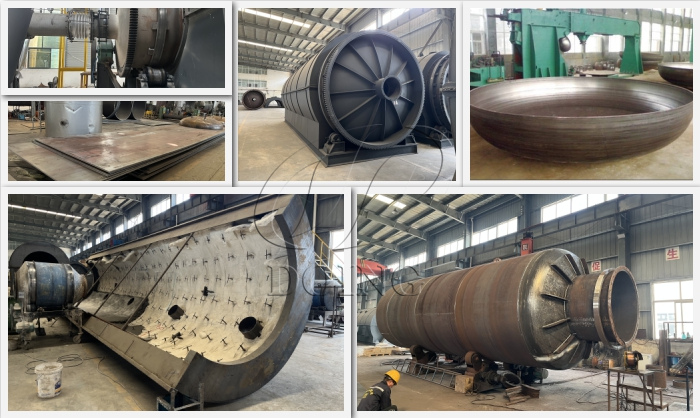 Waste Tire Pyrolysis Reactor Design and Materials
The waste tire pyrolysis project demonstrates immense market potential and investment value, distinguished by its diversified revenue streams and significant environmental benefits. From pyrolysis oil and carbon black to steel wire and self-consumed combustible gas, every stage presents an opportunity to transform waste into wealth. If you are interested in the waste tire pyrolysis project, please feel free to contact Henan DOING Company.
Leave A Message
Leave A Message