Professional·One-stop Services
Get customized solution and favorable quotes here: +86 13526692320

Oil sludge caking during pyrolysis can be minimized through proper pretreatment, controlled heating, continuous material movement, and mechanical decoking inside the reactor. Feed moisture, sludge viscosity, reactor design, and vapor removal all affect deposit formation.
Oil sludge may contain water, heavy hydrocarbons, fine solids, and emulsified oil. These materials can stick to hot surfaces and gradually form hard deposits if the feed is not properly prepared or the reactor does not provide sufficient material movement.
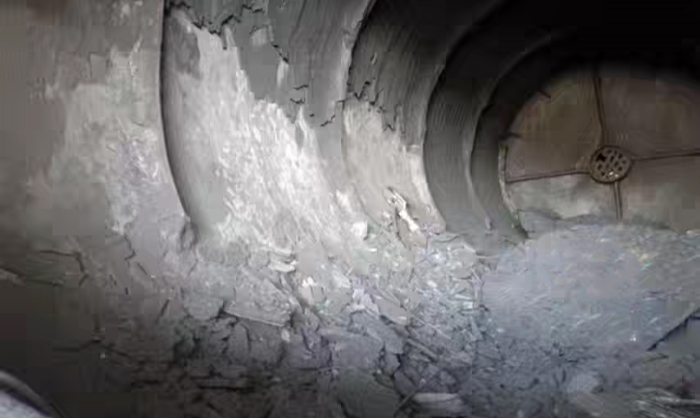 Coking and wall adhesion during oil sludge pyrolysis
When sludge cakes on the reactor wall, heat transfer can decrease, energy consumption may increase, and the reactor may need to stop for cleaning. An oil sludge pyrolysis reactor therefore needs to be designed for sticky feedstock rather than simply using the same configuration as a tire or plastic pyrolysis reactor.
Doing ECO (formerly Henan DOING) designs oil sludge pyrolysis systems around feed preparation, material movement, decoking, heating control, and vapor handling.
Oil sludge caking is usually related to several factors:
1.High moisture: Water can affect feeding and heat transfer, causing uneven heating.
2.High viscosity: Sticky sludge can adhere to hot reactor surfaces.
3.Fine solids and heavy hydrocarbons: These can remain on heated surfaces and gradually form harder deposits.
4.Poor material movement: Sludge that stays on the same hot surface for too long is more likely to build up.
5.Vapor condensation: Heavy vapors can form tar deposits around the reactor outlet and downstream equipment.
6.Insufficient decoking: Deposits can become harder and more difficult to remove over time.
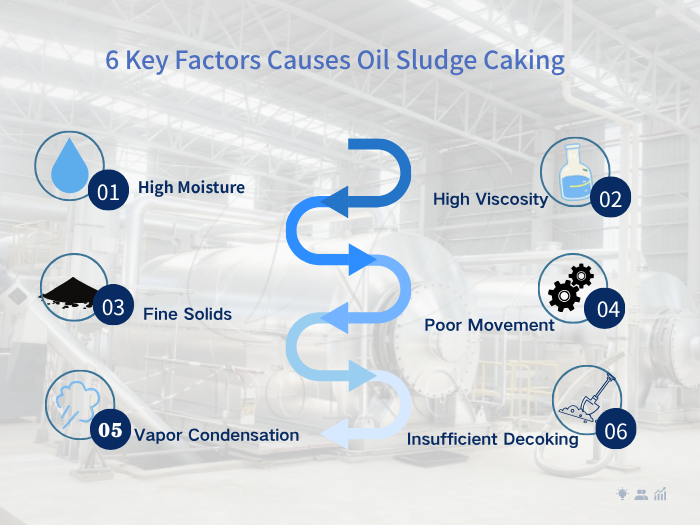 6 factors of coking during the pyrolysis of oily sludge
Pretreatment is the first step to reduce caking before the sludge enters the pyrolysis reactor.
Depending on the feedstock, dewatering, crushing, and drying may be required. Stable moisture helps improve feeding and reduce wet lumps and uneven heating.
For many oil sludge projects, a moisture content of around 15% or lower can be used as a practical reference. The suitable level depends on the actual sludge composition and reactor design.
If the sludge remains too sticky, it may be blended with dried sludge, recycled char, or another suitable dry carrier. The purpose is to make the feed easier to transport and keep it moving through the reactor instead of allowing it to behave like a thick paste.
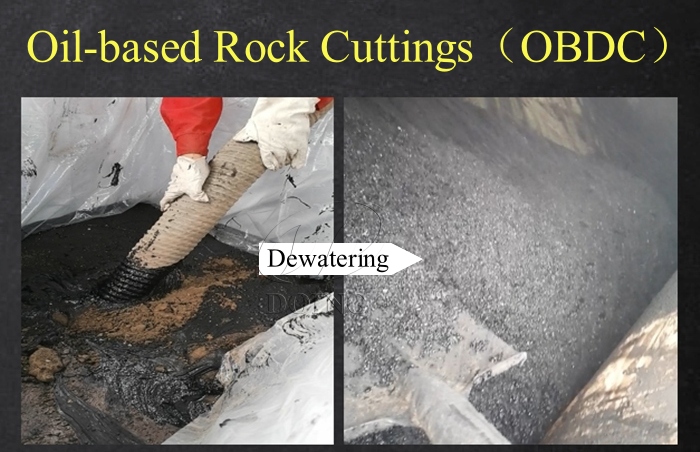 Pre-treatment for oily sludge dewatering before pyrolysis
Continuous material movement is important when processing sticky oil sludge.
In a Doing ECO oil sludge pyrolysis plant reactor, internal components continuously move and disturb the material. Depending on the reactor model, scrapers, lifters, decoking devices, maces, or energy balls can be used to:
Keep sludge moving through the heating zone
Improve contact between the feed and heated surfaces
Break up deposits before they become hard coke
Reduce the need for unplanned manual cleaning
Mechanical decoking is an important part of reactor design for sticky oil sludge. Increasing the furnace temperature alone is not a reliable solution to caking.
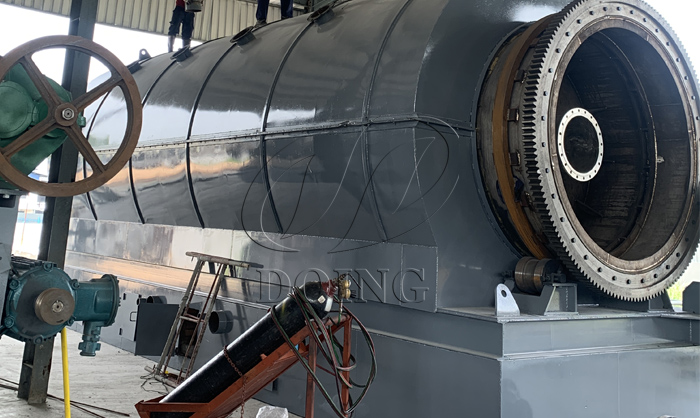 Equipment and tools for handling oil sludge coking during pyrolysis
Oil sludge can contain water, salts, and other impurities that create a more corrosive operating environment than typical tire or plastic pyrolysis.
For applicable oil sludge projects, Doing ECO uses stainless steel for the main reactor together with a built-in decoking system.
These two features serve different purposes: stainless steel mainly improves corrosion resistance, while the decoking system addresses deposit buildup. Stainless steel does not prevent coking by itself, but it can be beneficial for long-term operation under demanding sludge-processing conditions.
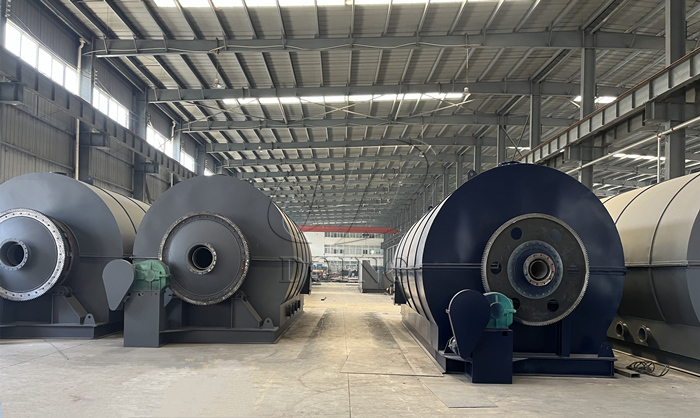 Stainless steel reactor for oil sludge pyrolysis equipment
Higher temperature does not always mean better oil recovery.
For many oil sludge applications, the pyrolysis temperature can be controlled within an approximate 450–550°C range, depending on the sludge composition and reactor design. Excessive temperatures may promote secondary cracking and coke formation instead of improving liquid-oil recovery.
The heating rate should also be controlled to reduce localized overheating. A reference heating rate of around 5–15°C/min may be suitable for some applications, but the actual operating range should be determined according to the feedstock and reactor design.
Efficient vapor removal is also important. Vapor lines should be kept sufficiently hot, while dust should be removed before condensation and oil vapor condensed promptly. This can help reduce tar deposits around the reactor outlet, cyclone, and condenser.
The reactor must remain oxygen-free during pyrolysis. Air leakage can cause unwanted oxidation, local overheating, and additional deposits.
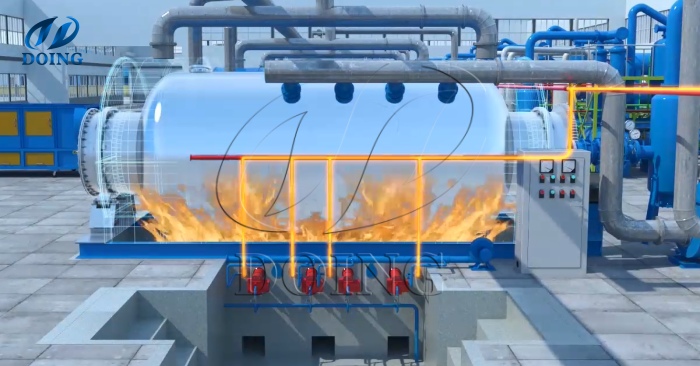 Pyrolysis reactor heating system under controlled temperature.
Caking usually develops gradually.
Operators should monitor:
Reactor drive torque
Reactor pressure
Temperature in each heating zone
Pressure drop across the cyclone and condenser
Feeding and discharge stability
A gradual increase in drive torque or pressure drop may indicate that deposits are building up inside the system. Early decoking can help prevent deposits from developing into a serious blockage.
Manual cleaning should be treated as planned maintenance rather than the normal way to keep the reactor operating.
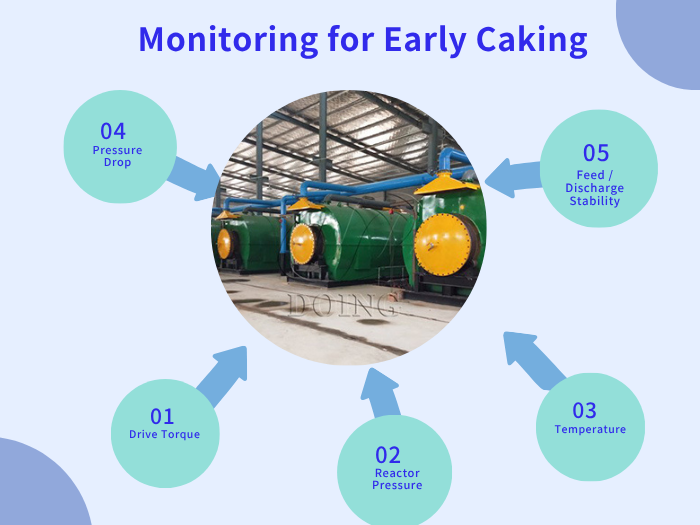 Specific procedures for preventing pyrolysis and coking of oil sludge
Oil sludge caking cannot always be completely eliminated because sludge composition varies from project to project. However, proper pretreatment, stable feeding, continuous material movement, controlled heating, efficient vapor handling, and mechanical decoking can significantly reduce deposit buildup and unplanned shutdowns.
The reactor configuration should therefore be matched to the actual sludge rather than using one standard design for every project.
Doing ECO (formerly Henan DOING Company) has supplied oil sludge pyrolysis systems in different capacities and configurations for projects in several countries, including:
Malaysia: 2 sets of 10 TPD semi-continuous oil sludge pyrolysis plants
Colombia: 4 sets of 15 TPD oil sludge pyrolysis plants
Mexico, 2026: 15 TPD stainless-steel oil sludge pyrolysis project
Inner Mongolia, China:50 TPD continuous oil sludge pyrolysis plant, with a theoretical annual processing capacity of up to 18,250 tons
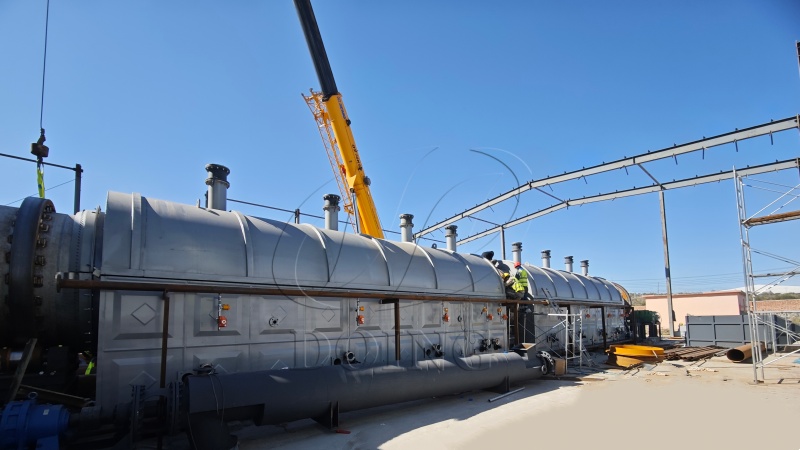 Doing ECO stainless steel oil sludge pyrolysis project
These projects reflect practical experience in selecting reactor materials and configuring material movement and decoking systems for oil sludge processing.
For an existing oil sludge pyrolysis plant, the following information can help identify the likely cause of caking:
Sludge moisture, oil content, and ash content
Reactor type and processing capacity
Operating temperature and heating rate
Feeding and discharge conditions
Deposit location, such as the feed inlet, reactor wall, screw, discharge, cyclone, or condenser
Doing ECO can use this information to recommend a suitable oil sludge pyrolysis reactor, decoking arrangement, and operating range for the project.
For oil sludge pyrolysis equipment and technical support, contact Doing ECO.
Leave A Message
Leave A Message